

District Heating in Ireland
Colloide recognises the immense potential of district heating in Ireland and we want to use our experience, lessons learned and skills to drive the implementation of district heating solutions across Ireland. With the new announcements in funding and investment, as well as our recent trip to the Irish District Energy Association event in Dublin, we are really excited about the opportunity to deliver district heat networks in Ireland.
Below we have shared our thoughts on the opportunity in the market as well as how we think we can support. To get this done, it requires collaboration, so if you are doing work around district heating and energy centres and require any support please reach out to us.
Recent Developments in the Irish District Heating Sector
The Irish Government and European Investment Bank (EIB) have made significant strides to address the country’s low uptake of district heating, which currently accounts for less than 1% of the heating sector in Ireland, one of the lowest shares in Europe. Two major announcements demonstrate this progress:
- EIB Partnership with SEAI: The EIB has launched an advisory partnership with the Sustainable Energy Authority of Ireland (SEAI) to attract investment and support the development of large-scale district heating networks.
- Government Funding: €5 million has been allocated through the National Development Plan and Infrastructure, Climate and Nature Fund (ICNF) to cover pre-construction costs for efficient district heating projects.
These initiatives reflect the commitment to decarbonise Ireland’s heating sector, supported by organisations like SEAI and the Department of Climate, Energy and the Environment.
Unlocking Potential in District Heating
District heating has the potential to play a transformative role in Ireland’s journey towards achieving its climate goals. There is huge opportunity to supply more heat through these systems, improving efficiency and costs wile reducing emissions.
The Tallaght District Heat Network, delivered by Codema, shows that the district heat model can be a success in Ireland using waste heat form a local data centre to supply public buildings and TU Dublin.
We commend the efforts of SEAI, EIB, and the Department of Climate, Energy and the Environment in driving the growth of district heating in Ireland. Additionally, we recognise the important work of organisations like HeatGrid, the Irish District Energy Association (IrDEA) and Codema in advocating for district heating and facilitating knowledge sharing across the industry.
Replicable District Heating in Europe and the UK
In June 2024, the European association, Euroheat & Power published a report taking stock of existing networks in Europe and their possible development. The data provided relate to the year 2022. It showed that 19,037 district heating networks were identified in the countries surveyed, supplying heat to over 77.3 million people in Europe. District heating is the most common heating solution in northern Europe. In Finland for instance, it accounts for about 45% of residential and commercial heating demands. In Denmark, widely considered a mature market, it accounts for 66% of heating demand. The total number of households connected to district heating in Denmark grew by 50,000 in 2022 and 40,000 in 2023. This trend is expected to continue in the next few years. In Eastern and Central Europe, the share of district heating ranges from about 40% in Poland and the Czech Republic, up to 45% in the Baltic countries. This proves it’s a solution that can be replicated in Ireland.
Colloide’s Experience Designing and Building District Heating Projects
Colloide has over 10 years of experience in renewable energy projects. We design and build district heating networks and energy centres, incorporating technologies such as biomass and combined heat and power (CHP). Our systems are highly efficient and allow for flexible integration of multiple energy sources, ensuring backup capabilities and maximum efficiency (e.g. electric boilers etc).
We have successfully delivered projects such as:
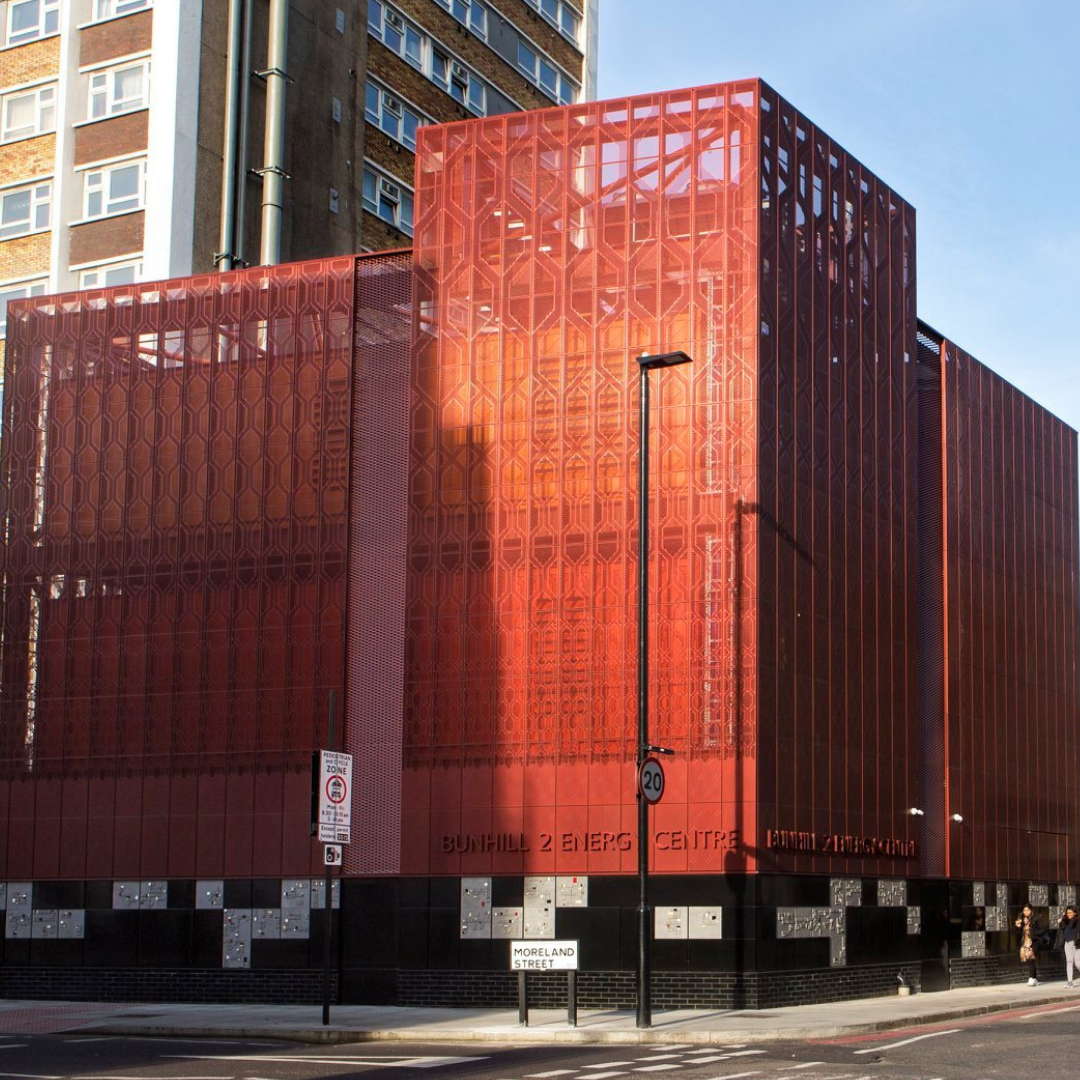
Bunhill 2 Energy Centre
Captures waste heat from the London Underground to heat 454 homes, with plans to expand to 1,000 homes. This project reduces CO2 emissions by 500 tonnes annually and cuts heating bills by 10%.
Learn more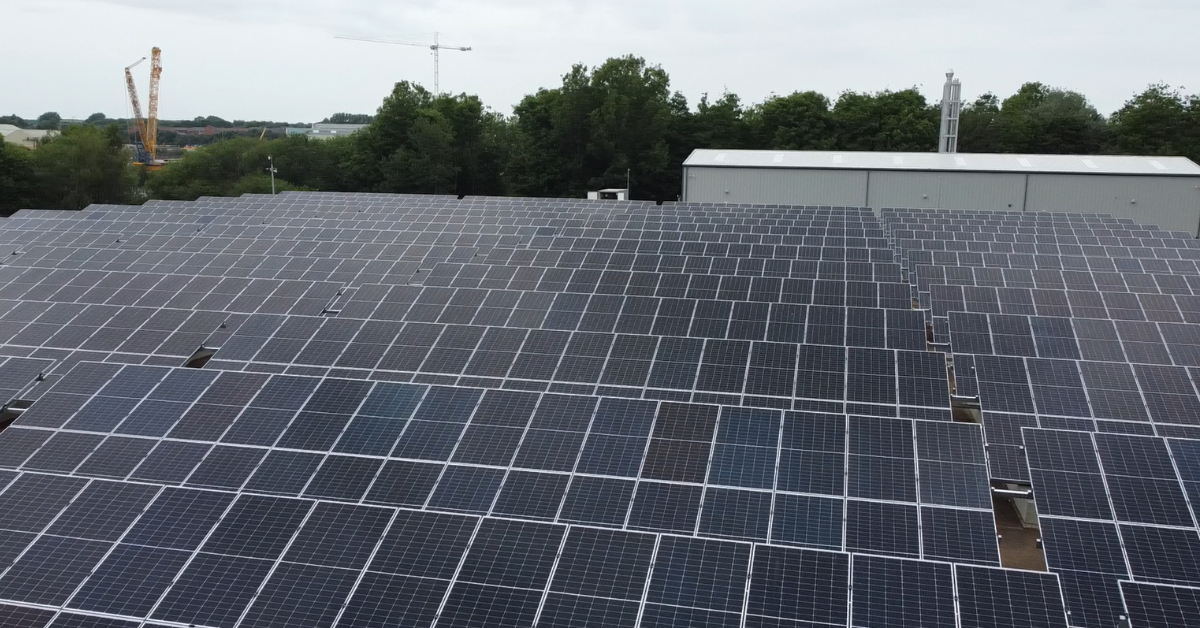
Viking Energy Network, Jarrow
Utilise a river source heat pump, solar farm, and CHP system to supply heating to 11 buildings. It reduces carbon emissions by 1,035 tonnes annually and saves £500,000 in fuel costs.
Learn moreColloide’s District Heating Systems
District heating systems include a centralised energy centre which then distributes the heat through a network of insulated pipes to the buildings which are connected to the network. The network of pipework consists of a flow and return loop which passes each building.
Colloide uses local substations in each building to control the flow of water from the district heating pipework loop through each substation, and this flow is used to generate heat in the local building.
The central energy centres are generally designed to have more than one energy source, which allows the plant operator to select the most cost efficient and sustainable way of providing the energy needed, with the energy sources being brought on and off line to meet demand.
We design and build the district heating and cooling networks to include the pumps, pipework, thermal stores, instrumentation, control systems, local substations, heat exchangers and communication through a central control system. We build in as much flexibility as possible.
The control system is central and provides the plant operator with full monitoring and control over the district heating network and, with remote access available to the controls, the operator can effectively manage the system from anywhere.
Colloide can engineer additional energy sources into the network in a way that maximises the system efficiency, making the overall system as efficient as possible. By incorporating energy source options, this ensures a backup is available if one energy source is off line.
How Colloide can help:
We bring proven delivery of complex district heating, energy centres and networks, control integration, and live plant room upgrades in urban settings.
We design and build biomass, CHP and multitechnology energy centres that integrate with district heating and broader decarbonisation plans.
We can work with local authorities and utilities to manage planning, traffic interfaces, resident engagement and commissioning to keep buildings warm while we connect them.
We can collaborate with the key stakeholders to provide lessons learned and share our skills and knowledge to ensure district heating achieves it's full potential in Ireland.
Unlimited Potential
Colloide recognises that collaboration and partnerships are essential to making district heating a reality. We commend the efforts of key organisations and bodies in promoting solutions that reduce emissions and lower fuel costs. Our own engineering expertise allows us to design and deliver tailored, scalable systems for residential, commercial, and industrial applications.
Recent announcements by the European Investment Bank (EIB) and the Irish Government, through the National Development Plan and the Infrastructure, Climate and Nature Fund (ICNF), mark a significant step forward for district heating. Darragh O’Brien TD highlighted the EIB’s new supports to help Ireland develop district heat networks, complementing dedicated grant funding from the Irish Government. These initiatives, alongside technical and advisory support from SEAI, underscore the momentum behind this underdeveloped sector.
District heating remains one of the smallest shares of the heating market in Ireland, yet it presents substantial growth potential. Colloide is committed to supporting its expansion, drawing on over a decade of experience in renewable energy projects such as Bunhill, Viking, and Bloomsbury. In addition to district heating, we deliver a range of alternative solutions to aid decarbonisation and build sustainable energy systems.
Through collaboration and innovation, Colloide is hoping to help to shape a resilient and sustainable energy future for Ireland.