

The UK Warm Homes Plan
Why the real opportunity is in “deliverable heat”, not just installed kit.
The UK’s Warm Homes Plan is being positioned as the biggest home upgrade programme in British history, backed by £15bn and an ambition to upgrade 5 million homes by 2030.
That headline matters. But what matters more is how the Plan reshapes delivery.
Because Warm Homes isn’t a single scheme. It’s a new operating environment for domestic heat and building energy, where funding, consumer expectations, local leadership and grid readiness all start pulling in the same direction. Energy Saving Trust calls it a “structural reset”, with local authorities central to delivery, a new national agency in the mix, and a renewed push on heat networks and zoning.
From Colloide’s perspective, this is the key shift. The next decade will reward organisations that can turn policy intent into repeatable, low-risk outcomes for warmth, bill savings, reliability and measured carbon reduction, across thousands of connections, not dozens.
What the UK Warm Homes Plan is trying to do, in practical terms
The Plan combines a universal offer (“upgrade when you want”) with targeted support (“upgrade when you need”), aiming to permanently reduce bills and fuel poverty while cutting exposure to volatile fossil fuel markets.
We have briefly set out the delivery architecture:
- £15bn public funding deployed through a mix of direct grants, low/zero-interest consumer loans, and other green finance mechanisms.
- A £5bn Warm Homes Fund, intended to mobilise private investment alongside public spending, with the Plan expecting £38bn total investment over the Parliament once local authority/social landlord/private finance is included.
- A clear scaling direction: over 450,000 heat pump installations per year by 2030 and 3 million additional homes with rooftop solar.
- Scheme transition points that will shape pipelines: GBIS ends 31 March 2026, ECO4 extended to 31 December 2026 (primarily for remediation), and existing low-income grant routes initially continuing before consolidation from 2027/28.
For households, this will feel like a home upgrade offer. For the sector, it’s a market transition with new rules: funding windows, aggregation, stronger standards, and (critically) more scrutiny on whether upgrades actually deliver comfort and savings in the real world.
Why heat networks become more important under Warm Homes
Warm Homes is often discussed through the lens of heat pumps and insulation. But it also explicitly strengthens the case for communal and district heating, with the Energy Saving Trust highlighting both heat networks and zoning as a renewed focus area.
That matters because heat networks are one of the few pathways that can decarbonise heat at scale in dense urban settings and complex estates, particularly where individual building interventions are constrained. And the Plan’s direction of travel is clearly to treat heat networks as strategic infrastructure, stating an expectation that around a fifth of building heat demand in 2050 could be supplied through low-carbon heat networks, with a nearer-term aim to double heat demand met via networks to 7% by 2035.
This is also where the conversation naturally includes major delivery organisations; developers, ESCOs, local authority partners and strategic asset owners, because scaling heat networks is ultimately about scaling delivery confidence.
The lesson from operational networks: “performance is designed, commissioned, and protected”
If there’s one consistent learning from live district energy, it’s that success is rarely defined at practical completion. The hard part is sustained performance: keeping temperatures, efficiency, availability and customer experience stable as networks expand, loads change and systems age. Colloide’s track record in district heating and energy centres has been built in exactly these “outcomes over time” environments.
That’s why Warm Homes’ ambitions place a premium on engineering fundamentals that don’t always make headlines:
Engineering Fundamentals
Commissioning quality and repeatability
Controls strategy and operational tuning
Hydraulic stability across phased expansions
Water quality and heat exchanger protection
Maintenance access and monitoring from day one
Colloide’s Experience Designing and Building District Heating Projects
Colloide has over 10 years of experience in renewable energy projects. We design and build district heating networks and energy centres, incorporating technologies such as biomass and combined heat and power (CHP). Our systems are highly efficient and allow for flexible integration of multiple energy sources, ensuring backup capabilities and maximum efficiency (e.g. electric boilers etc).
The three projects delivered by Colloide below, share a common theme that Warm Homes will expose at scale. District energy is not a single technology choice; it’s an operational system that must be made reliable, efficient, and maintainable.

Bunhill 2 Energy Centre
Captures waste heat from the London Underground to heat 454 homes, with plans to expand to 1,000 homes. This project reduces CO2 emissions by 500 tonnes annually and cuts heating bills by 10%.
Learn more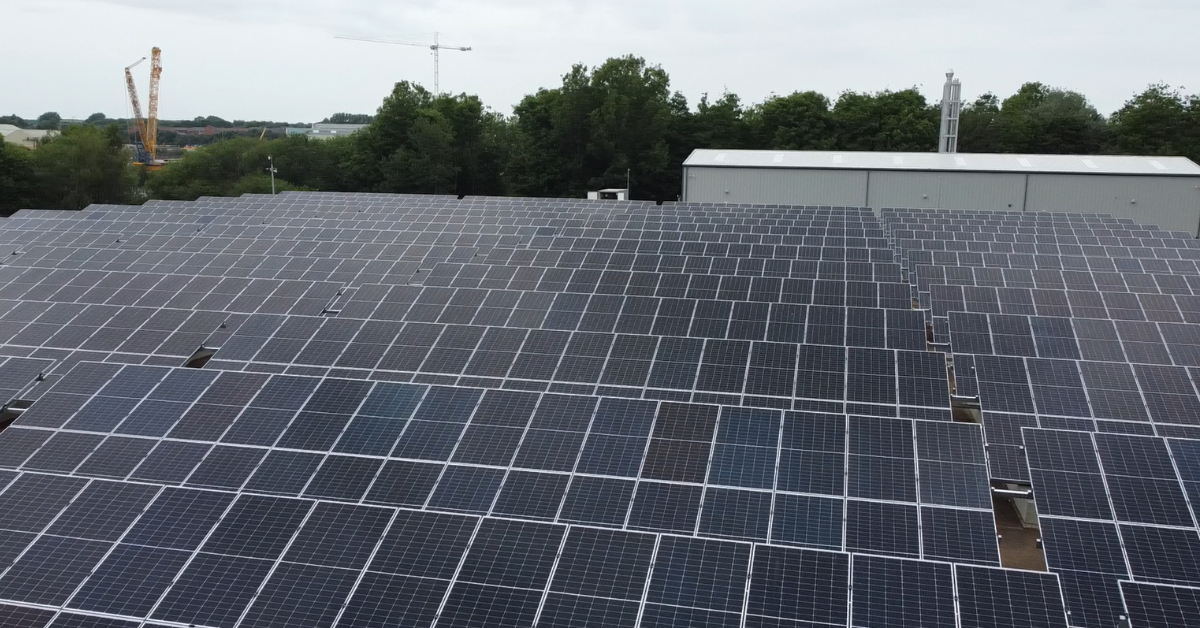
Viking Energy Network, Jarrow
Utilise a river source heat pump, solar farm, and CHP system to supply heating to 11 buildings. It reduces carbon emissions by 1,035 tonnes annually and saves £500,000 in fuel costs.
Learn more
Bloomsbury Heat and Power Network
Bloomsbury is a different challenge. A long-established network serving major institutions in a dense central London setting. The University of London, University College London (UCL), and SOAS University of London, aim to decarbonise the Bloomsbury estate by 99%. The existing gas- and oil-fired systems will be replaced with low-carbon air source heat pumps and electric boilers, with an expected 88% emissions reduction by 2030.
Learn more
What this means for the UK Warm Homes Plan supply chain
Warm Homes will increase demand, but it will also raise expectations on quality, on safety, on consumer outcomes, and on evidence.
That has implications for several audiences, without turning the Plan into “just a developer story”.
Local authorities and housing providers
Place-based delivery, investable pipelines, and partners who can minimise operational burden as programmes scale.
Heat network developers and delivery partners (including large portfolio players)
A need for performance assurance that stands up to future regulation and customer scrutiny as zoning and expansion accelerate.
Asset owners with complex estates
Decarbonisation routes that work around live operations, phased delivery, and legacy plant constraints (Bloomsbury being a clear example).
Finance and governance stakeholders
Confidence that projected savings and carbon reductions are deliverable through design, commissioning, monitoring and long-term operational discipline, not optimistic modelling.
Colloide’s Position
Colloide’s positioning can evolve naturally with the market. DBOM remains a proven route in many contexts but increasingly, delivery organisations want specialist capability that can integrate into their model: strengthening design assurance, commissioning strategy, and long-term optimisation across portfolios.
Warm Homes will be judged on lived experience; warmth, reliability, affordability, not on installed counts. So, our view is that the sector should treat “delivery quality” like infrastructure does: standardised where it can be, engineered to context where it must be, and verified in operation.
That mindset; built on experience in urban heat recovery, river-source networks, and estate-scale energy centre upgrades, is what turns policy momentum into outcomes that last.
If you’re building a Warm Homes-aligned pipeline, whether that’s a heat network zone, an estate decarbonisation programme, or a portfolio of energy centres, Colloide can support you with the parts that most often decide success in year 3, 5 and 10: delivery readiness, commissioning, operational optimisation, and long-term performance protection.
If you’d like to explore how Colloide’s district heating experience can de-risk delivery on your next programme, we’d welcome a conversation.
Sources:
https://www.gov.uk/government/news/families-to-save-in-biggest-home-upgrade-plan-in-british-history
https://energysavingtrust.org.uk/the-warm-homes-plan-what-local-authorities-need-to-know/
https://www.bbc.co.uk/news/articles/ckgj7me00p0o