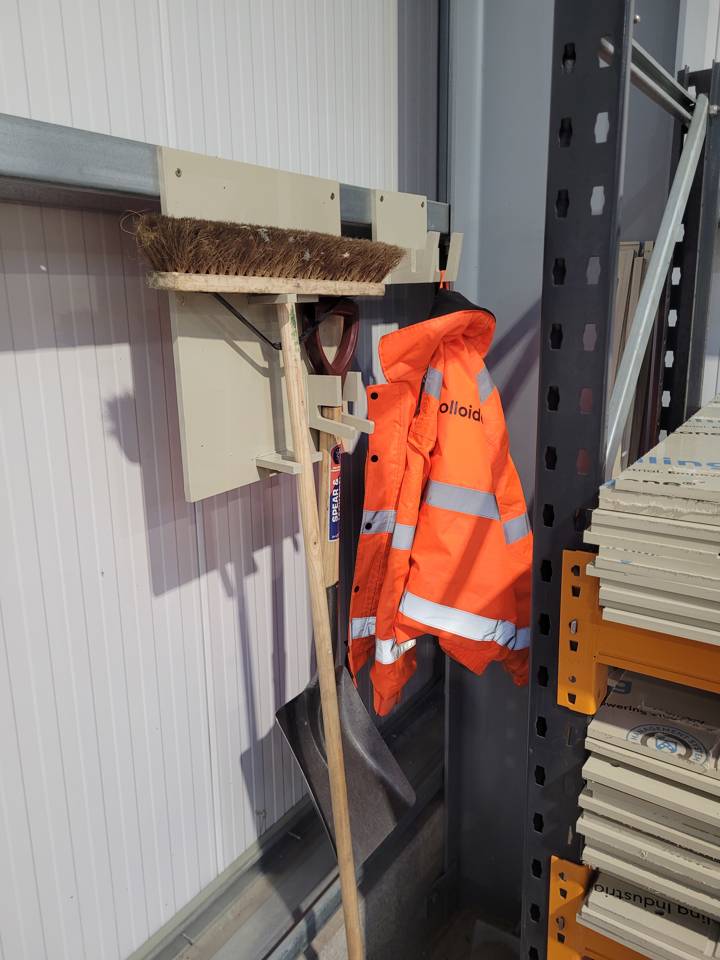

What Lean Manufacturing Means for Our Clients
Lean manufacturing is often discussed in terms of what happens inside a factory: reducing waste, improving workflows, standardising processes and making production more efficient.
For clients, however, the real question is simpler:
What difference does it make to my project?
The answer should be tangible. Shorter lead times. More reliable delivery dates. Consistent quality. Better visibility of progress. Fewer avoidable problems reaching site. And greater confidence that manufactured equipment will be available when the wider programme needs it.
That is ultimately what Colloide’s Lean journey is intended to deliver.
For infrastructure clients managing complex programmes, manufacturing efficiency should never be viewed in isolation. A delay in one manufactured package can affect civils, installation resources, commissioning and wider project milestones. Improving what happens inside the factory can therefore have consequences far beyond the factory floor.
The real value of Lean is predictability
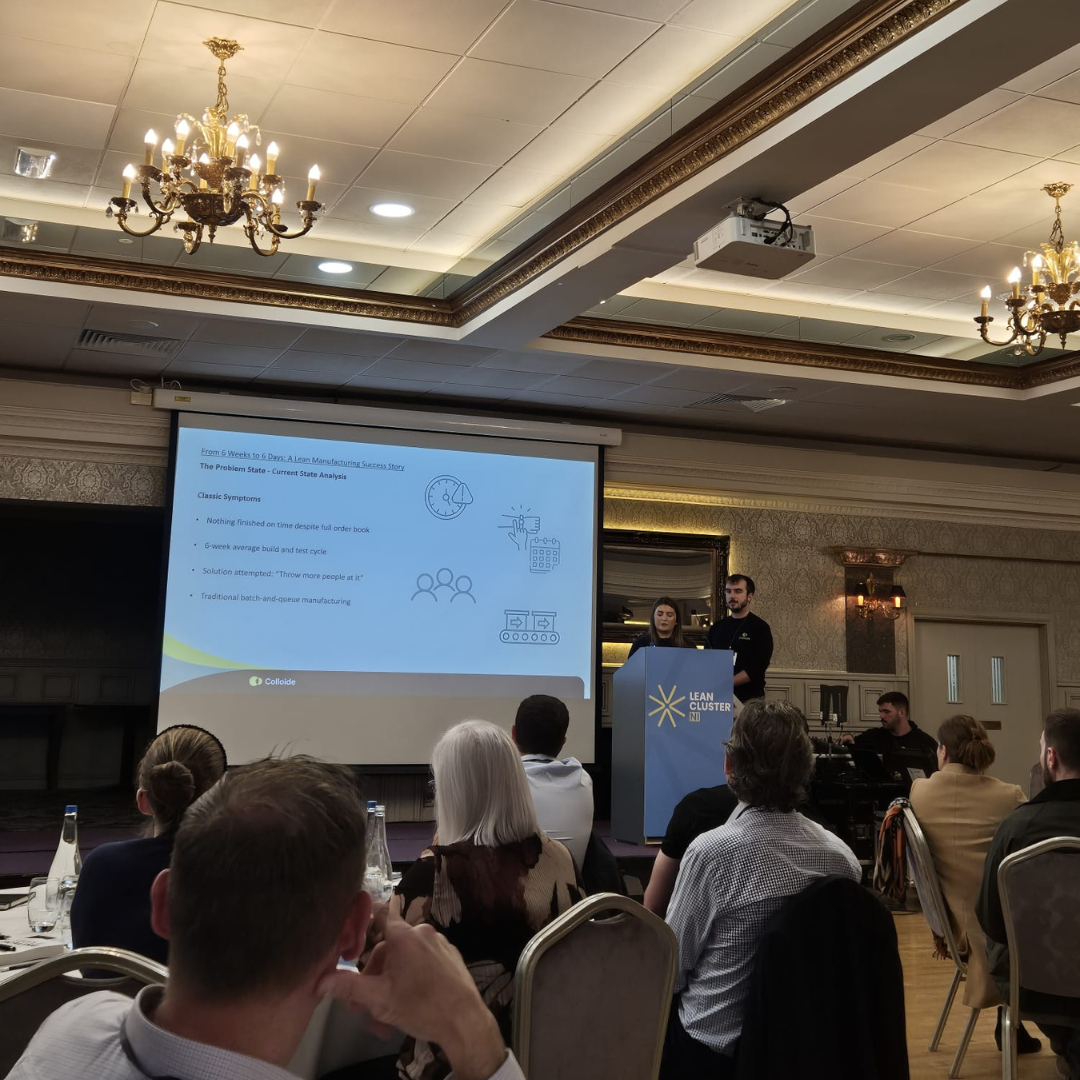
Before adopting Lean principles, Colloide’s average build and test cycle was longer than desired and meeting deadlines could rely on increasing resources rather than addressing the underlying inefficiencies within the production process. The business was operating with a traditional batch-and-queue manufacturing approach, creating bottlenecks and limiting production flow. That is an important distinction.
Adding more people or capacity can help deal with a short-term production challenge. But it does not necessarily remove the reason that challenge exists.
Lean asks a different question: where is time being lost, why is it being lost, and can the process itself be improved?
By applying that thinking to its Limavady manufacturing facility, Colloide reduced the lead time for targeted manufacturing processes from six weeks to six days; a 90% reduction. On-time delivery also became more reliable.
For a client, the significance is not simply that something can be manufactured faster.
It is that greater control over manufacturing creates greater confidence in the programme.
When delivery dates are more predictable, contractors can coordinate resources more effectively, site teams can plan installations with greater certainty and manufactured equipment is less likely to become the constraint that holds up subsequent work.

Removing wasted time before it reaches the client
Some of the most effective Lean improvements are not dramatic technological changes. They are practical changes to how work is designed, assembled and communicated.
Individually, these improvements can seem small. Across programmes involving tens or hundreds of manufactured units, their cumulative impact becomes much more significant.
Smarter electrical assembly
95% pre-wired on the bench
Previously, 100% of wiring for chemical dosing kiosks was completed inside the kiosk itself.
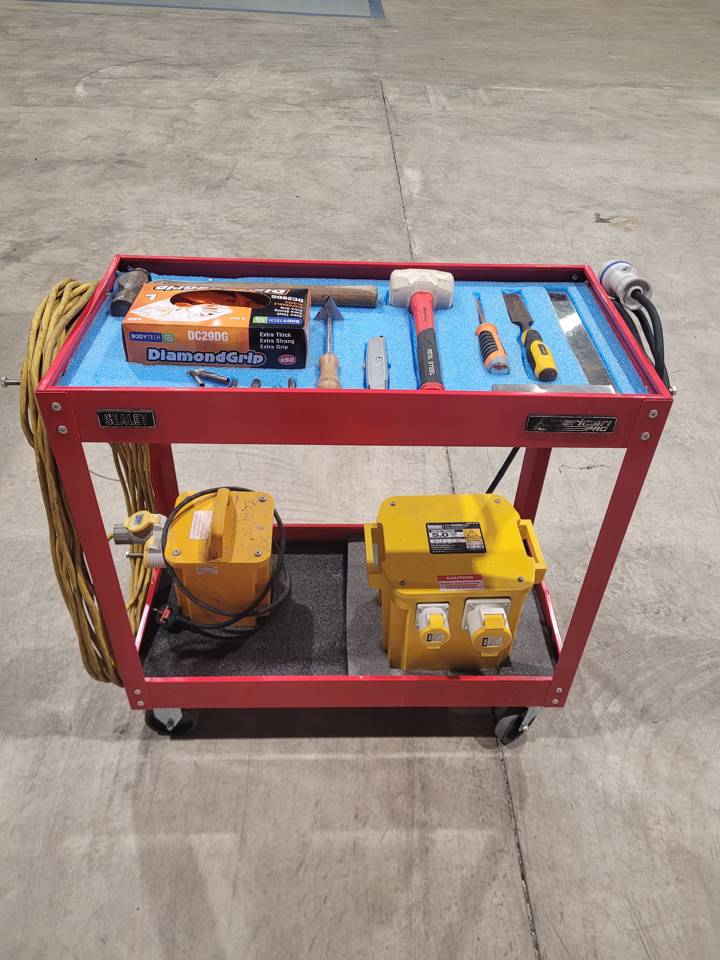
By introducing jigs, fixtures and bench pre-wiring, approximately 95% can now be completed before final assembly.
Client benefit:Reduced assembly time and a more repeatable production process.
Designing for manufacture
Making systems easier to build
Design-for-manufacture improvements have helped remove unnecessary measurements, simplify assembly and reduce setup time.
Client benefit: Less avoidable rework and a smoother transition from design into production.
Better communication
Getting changes right at the right time
Closer communication between engineering and manufacturing teams helps ensure design changes are identified, agreed and standardised earlier.
Client benefit: Fewer late-stage changes and less disruption once manufacturing is underway.
The cumulative effect
Small improvements. Greater delivery certainty.
Every unnecessary measurement removed, every repeatable assembly made easier and every avoidable delay eliminated creates additional production capacity without compromising engineering quality.
Client benefit: More dependable delivery across larger programmes.
The Lean Value Stream
Client Requirement → Design → Procurement → Manufacture → Delivery → Handover
Lean looks at the whole journey. An inefficient approval can delay a drawing. A delayed drawing can affect procurement. A procurement delay can affect manufacture. And a manufacturing delay can ultimately reach site. By improving the flow between each stage, we aim to remove problems earlier rather than simply manage their consequences later.
Lean is not about one major intervention. It is about removing hundreds of small inefficiencies before they have the opportunity to affect the client’s programme.
Better visibility means problems can be addressed earlier
Programme certainty depends on knowing what is happening, not simply reacting when something goes wrong.
The introduction of Kanban visual management and a pull-based production system at Colloide has helped create a clearer and more predictable flow through manufacturing. Instead of producing ahead simply because capacity is available, production can be aligned more closely with what is actually required.
ShopFloorLive has also introduced real-time production visibility and clearer daily routing guidance at the point of work.
The value of that visibility extends beyond production management.
When the status of work is clearer internally, project teams are better positioned to understand progress, identify constraints and communicate realistic delivery information.
That matters on infrastructure programmes because the earlier a potential issue is visible, the greater the opportunity to manage it before it affects site activities.
Visibility inside the factory supports predictability outside it.
Lean starts before equipment reaches production
Manufacturing efficiency cannot be separated from engineering design.
If designs are difficult to manufacture, unnecessarily bespoke or changed too late, inefficiency is effectively designed into the production process.
That is why one of the most important elements of Colloide’s Lean journey has been closer alignment between design and manufacturing. Engineering changes have been introduced to make systems easier to manufacture, reduce setup requirements and improve communication between office-based and production teams.
This complements a wider approach Colloide has already applied across major water-sector programmes: standardise what can sensibly be standardised and concentrate engineering effort on what genuinely needs to be different.
Working with Severn Trent Water, for example, Colloide developed a standardised suite of chemical dosing rigs intended to meet the majority of site requirements.
The original target was to develop standard products capable of meeting approximately 80% of requirements.
In practice, only 6% of the sites delivered required design modifications to accommodate site-specific constraints. The wider standardisation and advance-procurement approach reduced turnaround time from order to site by 60%.
This is an important principle for programme delivery.
Standardisation does not mean removing flexibility. It means removing unnecessary variation.
Engineering resource can then be concentrated on the interfaces, constraints and risks that genuinely require engineering judgement rather than repeatedly redesigning elements that have already been proven.
Doing more in the factory can mean doing less on site
This becomes particularly important when equipment is destined for operational infrastructure.
Water and wastewater treatment sites can present restricted working areas, operational interfaces, multiple contractors and tight commissioning windows. Every activity transferred from a live site into a controlled manufacturing environment can therefore have wider programme benefits.
Colloide has long used off-site manufacture, modularisation and plug-and-play principles within its chemical dosing offering. Its advance-procurement approach has enabled completed equipment to be held ready for deployment, with standardised rigs capable of being called off to site in approximately two to three weeks rather than the three-to-six-month timescales associated with more traditional project-by-project manufacture.
Lean strengthens that approach.
If assembly can be simplified, production flow improved and more work completed efficiently before equipment leaves the manufacturing facility, there is less reliance on resolving avoidable issues once teams arrive on site.
That can mean shorter installation periods, fewer interfaces and reduced exposure to the uncertainty of live construction environments.
Waste can exist anywhere in a business
Lean should extend beyond the factory floor
Removing unnecessary steps
Lean thinking can be applied to everyday office processes just as effectively as manufacturing.
By challenging duplicated administration, unnecessary handovers and repetitive tasks, we can make internal processes simpler and more efficient.
The outcome: Less wasted time and more focus on activities that add value to the project.
Getting the right information to the right people
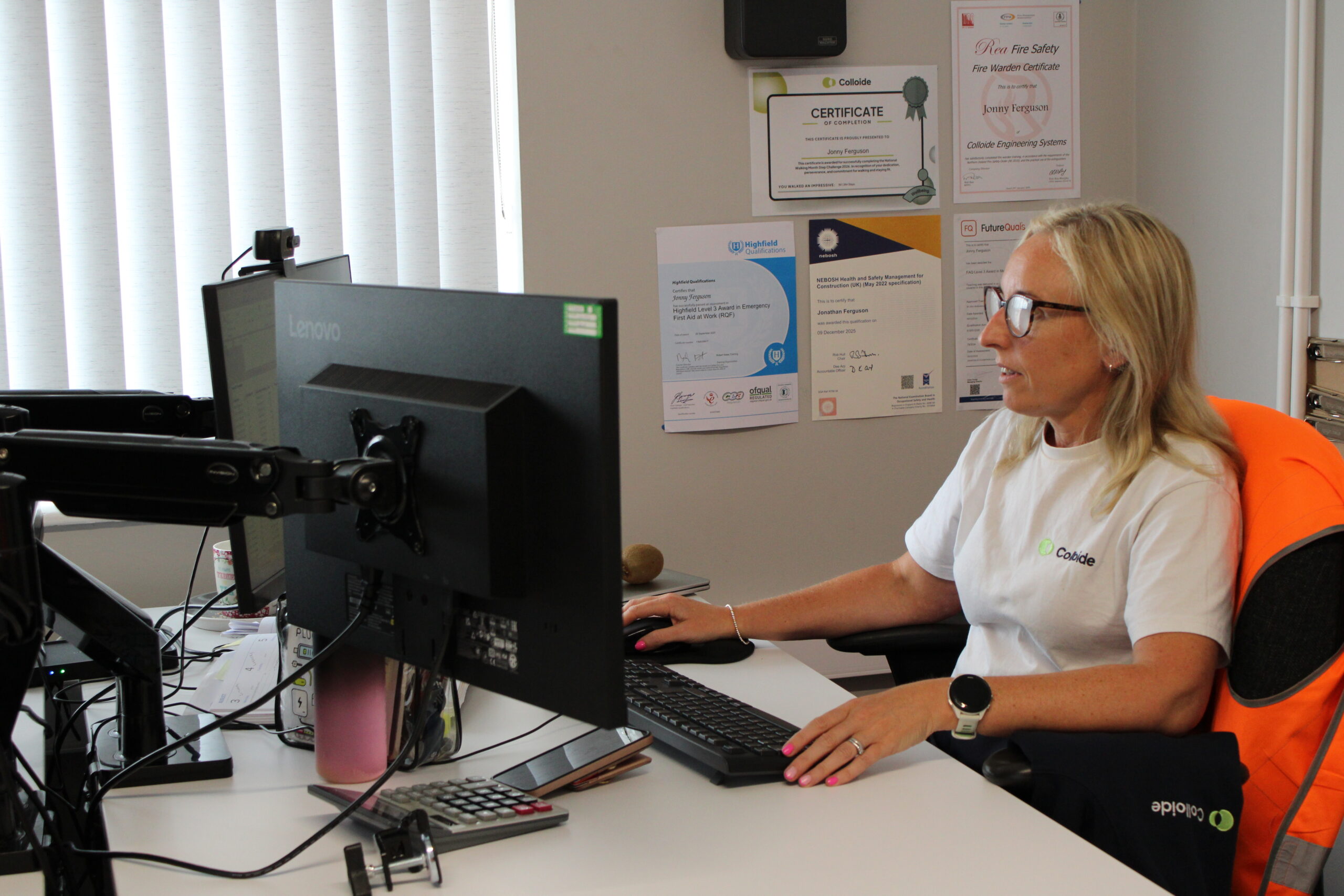
Delays are not always caused by manufacturing. Sometimes teams are simply waiting for information, approvals or decisions.
Improving how information moves between design, procurement, project management and production helps prevent these bottlenecks.
The outcome: Clearer communication and faster decision-making
Making work more visible
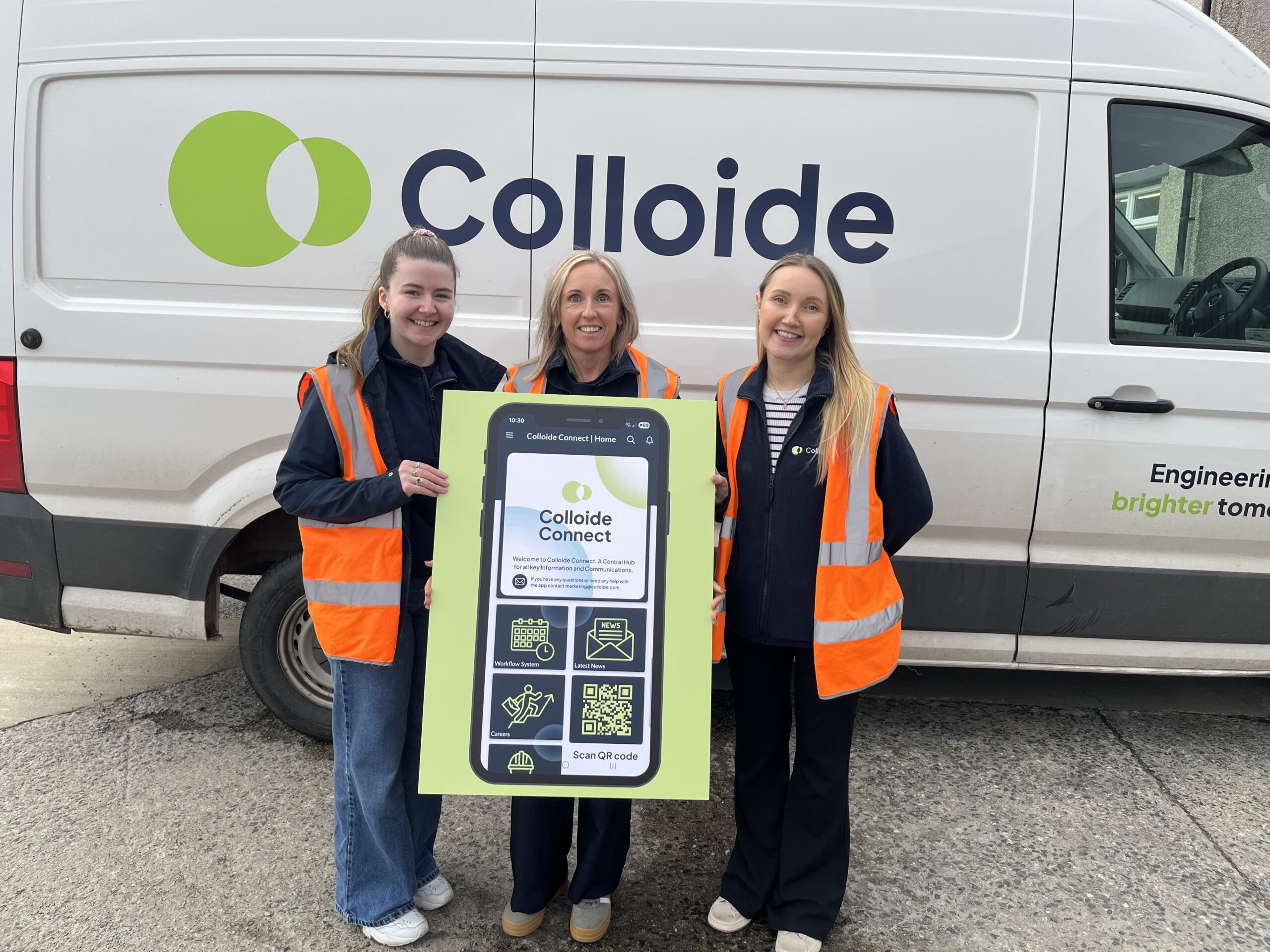
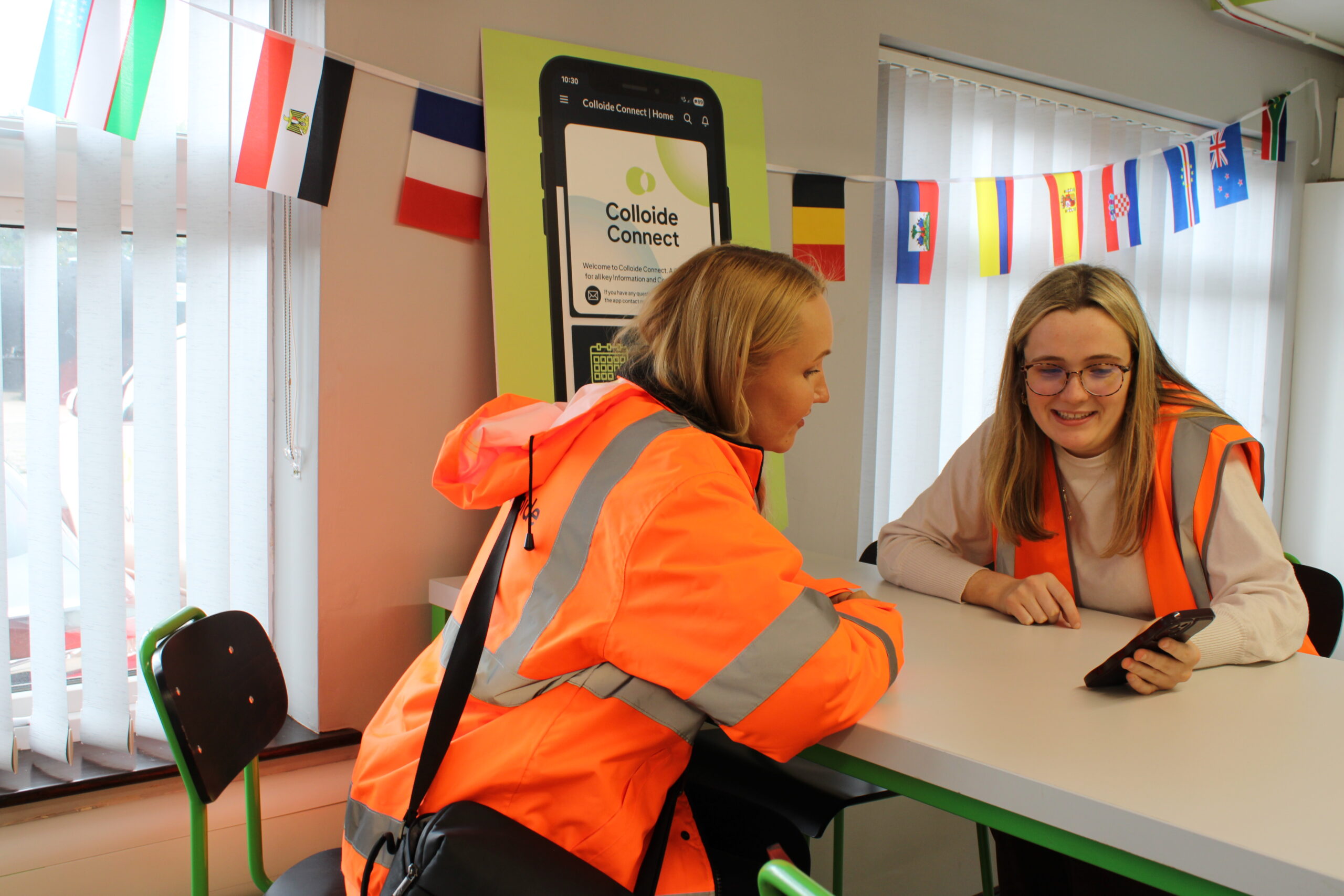
Digital processes supporting areas such as NCRs, snags and stock management are helping improve transparency and make information easier to access.
Greater visibility also makes it easier to identify issues earlier rather than discovering them further into the project.
The outcome: Better visibility and fewer avoidable surprises.
Making Lean everyone's responsibility
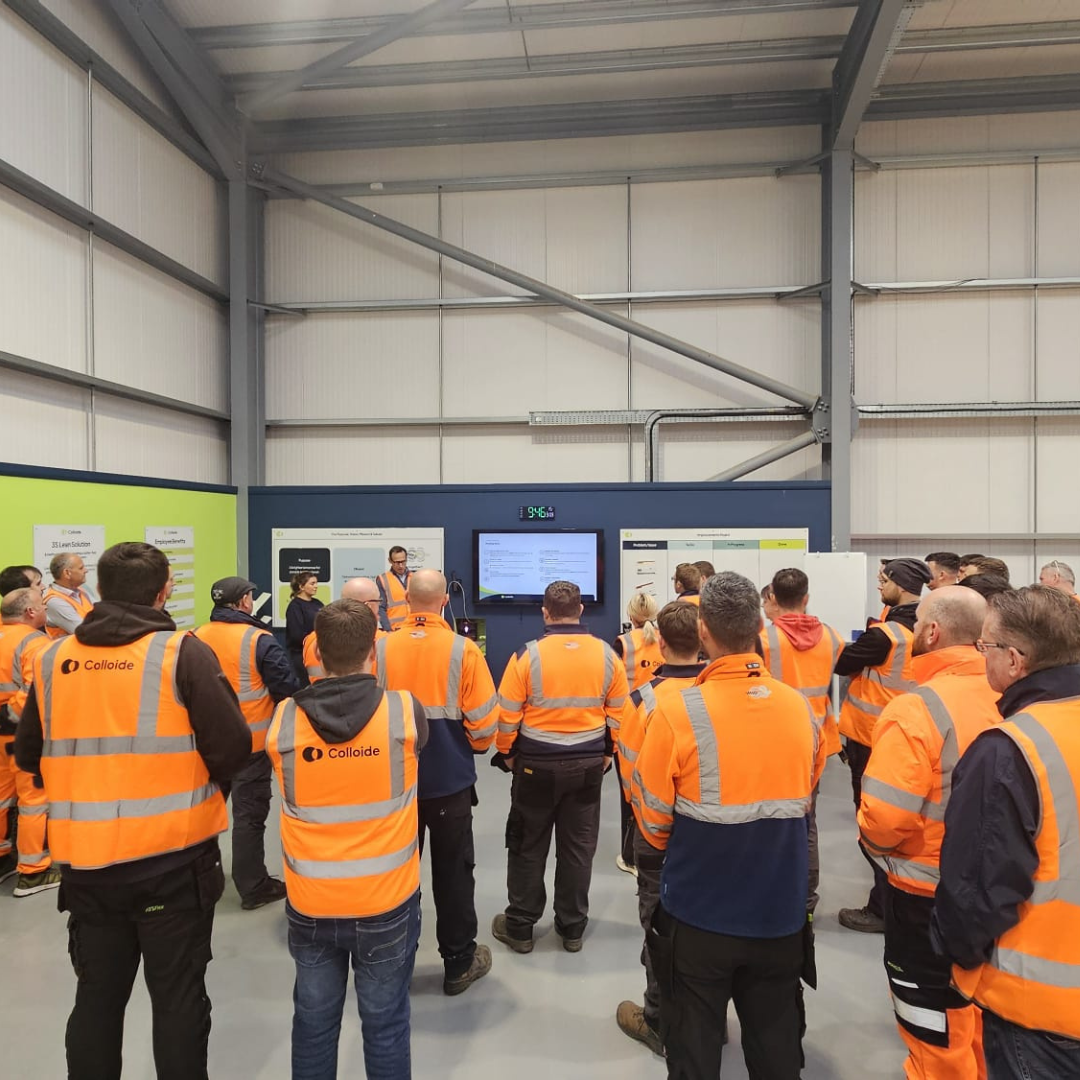
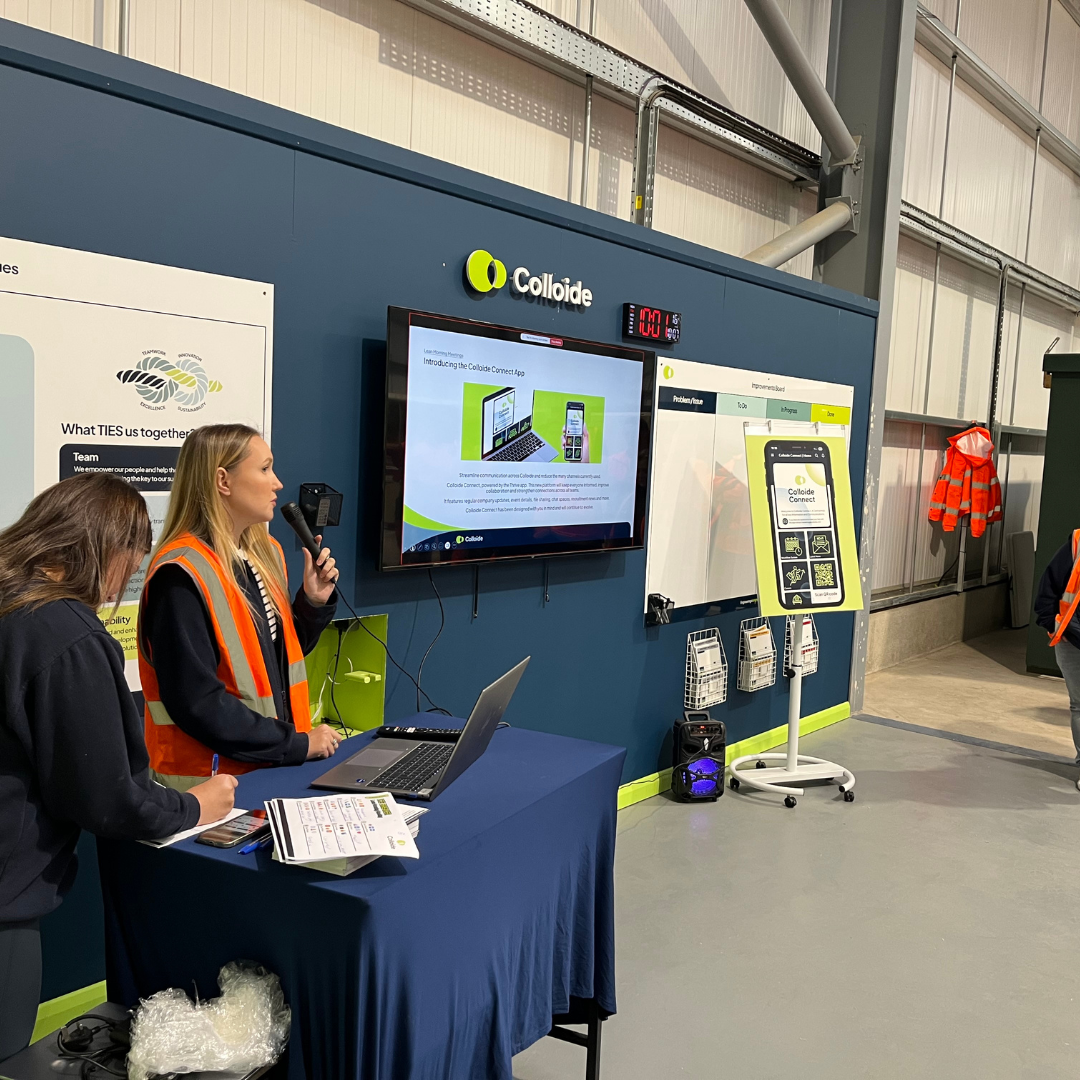
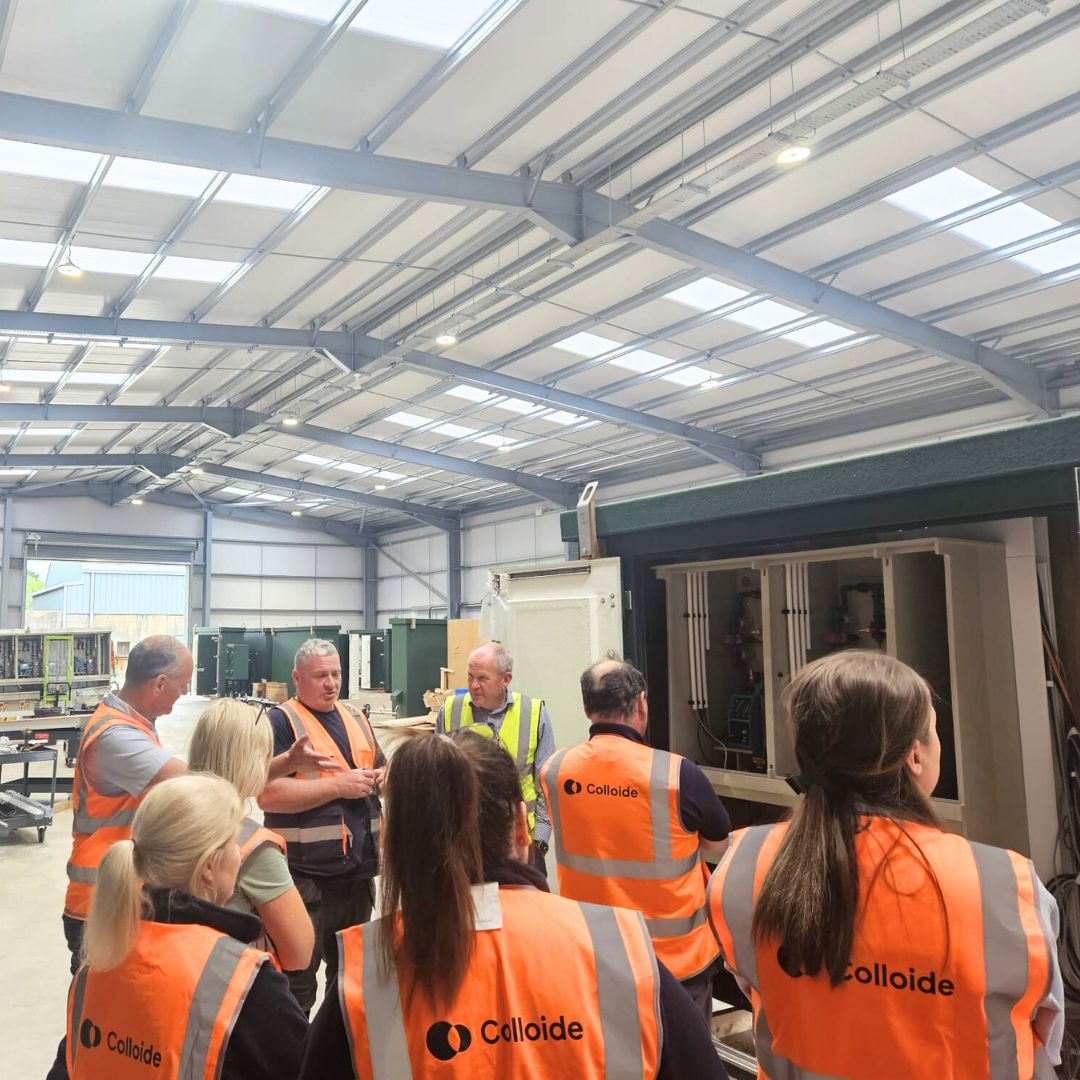
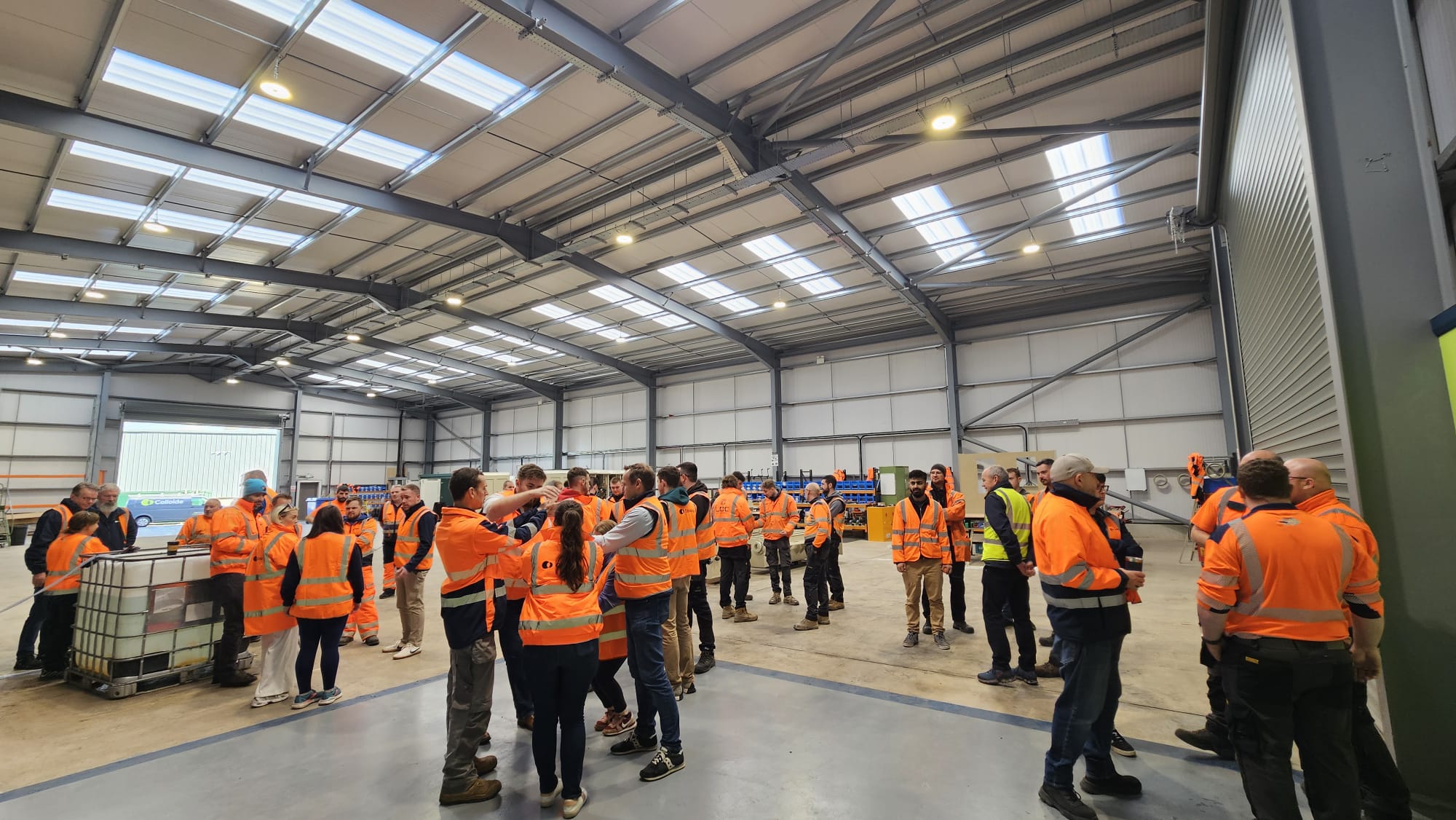
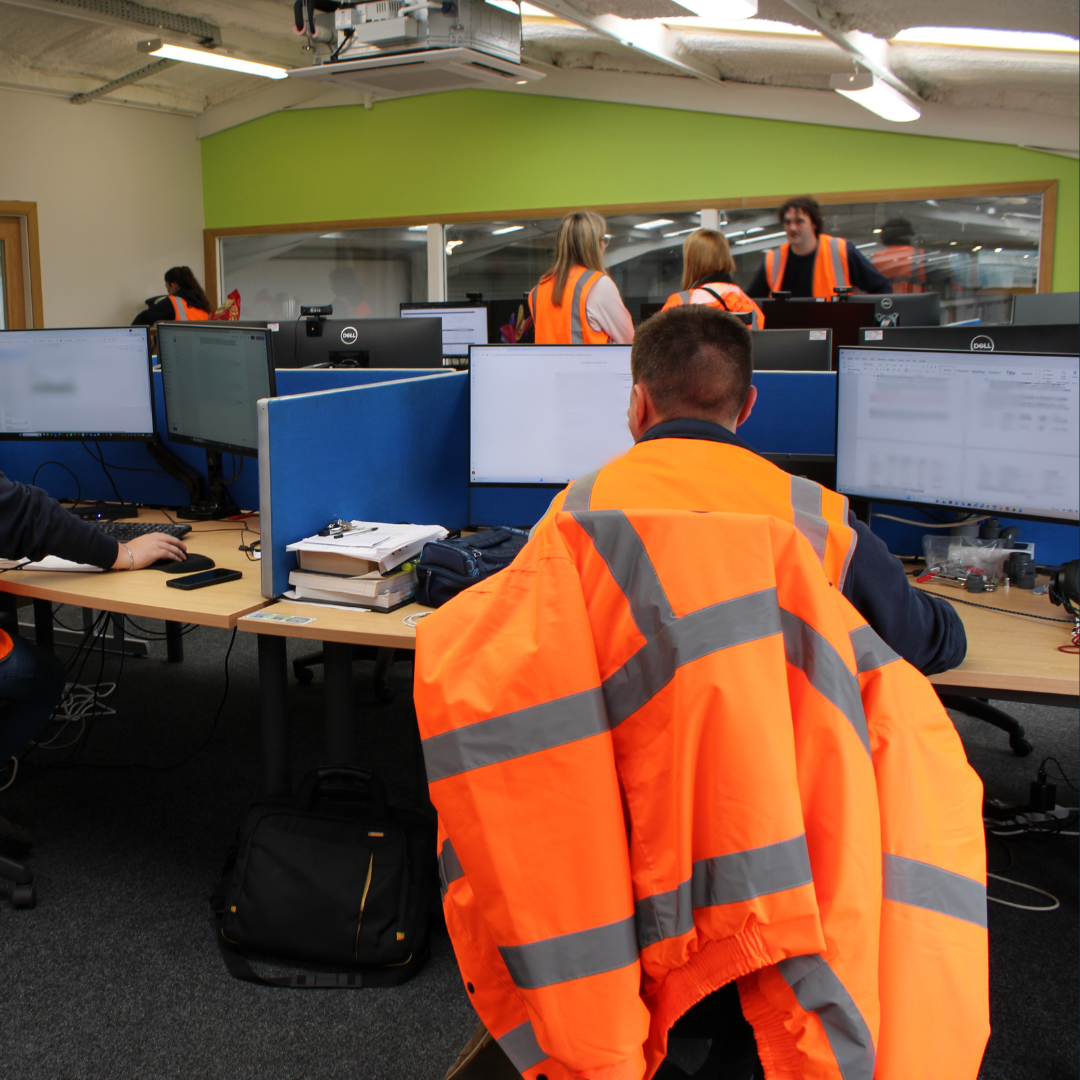
Weekly Gemba Walks and Lean morning meetings bring people from different areas of Colloide closer to the work being delivered.
They provide opportunities to share improvements, customer feedback and lessons learned across teams rather than allowing knowledge to remain within individual departments.
The outcome: Continuous improvement across the whole business.
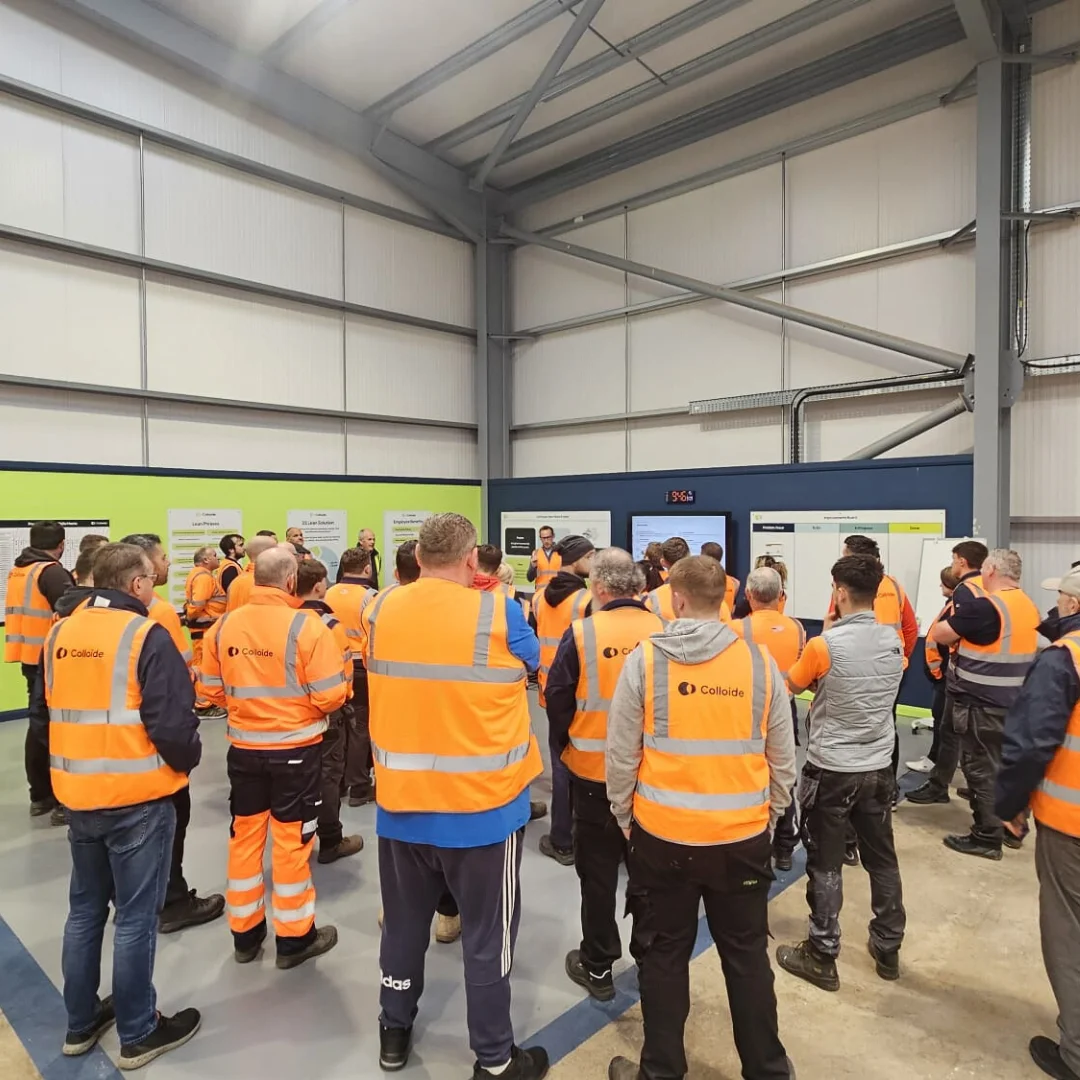
That is why Lean at Colloide should not be viewed simply as a programme for making our manufacturing facility more efficient.
It is about creating a culture in which every part of the business continually asks how work can flow better, how unnecessary effort can be removed and how we can make it easier to deliver the right outcome for the client.
Ultimately, a Lean office, a Lean design process and a Lean project-management approach should achieve much the same thing as a Lean factory: less waste, better visibility, clearer communication and more predictable delivery.
Colloide’s Lean programme is still a journey. The intention is to maintain focus on continuous improvement rather than treating Lean as a one-off efficiency exercise.
Clients should not have to understand every Lean tool being used inside our business. They should experience the result.
Because Lean manufacturing is not really about making the factory move faster. It is about removing uncertainty from the journey between design, manufacture, delivery, and everything in between. Ultimately, giving our clients greater confidence in what happens next.
Lean at Colloide: Continually Improving
Want to see more stories, updates and progress from our lean journey? Head over to the Lean at Colloide Central page. Our space for all lean news, from continuous improvement projects to practical lean tips, it’s the hub that brings everything together. Make sure to check in regularly to see the progress we’re making and the ideas shaping the way we work.