

Bridge Scrapers FAQs
We have taken some of your most popular questions about Bridge Scrapers and our experts have answered them below. We will continue to update this page as innovation continues. The go-to place for all your Bridge Scraper queries. If you have a question that we have not covered yet, please feel free to let us know by emailing [email protected].
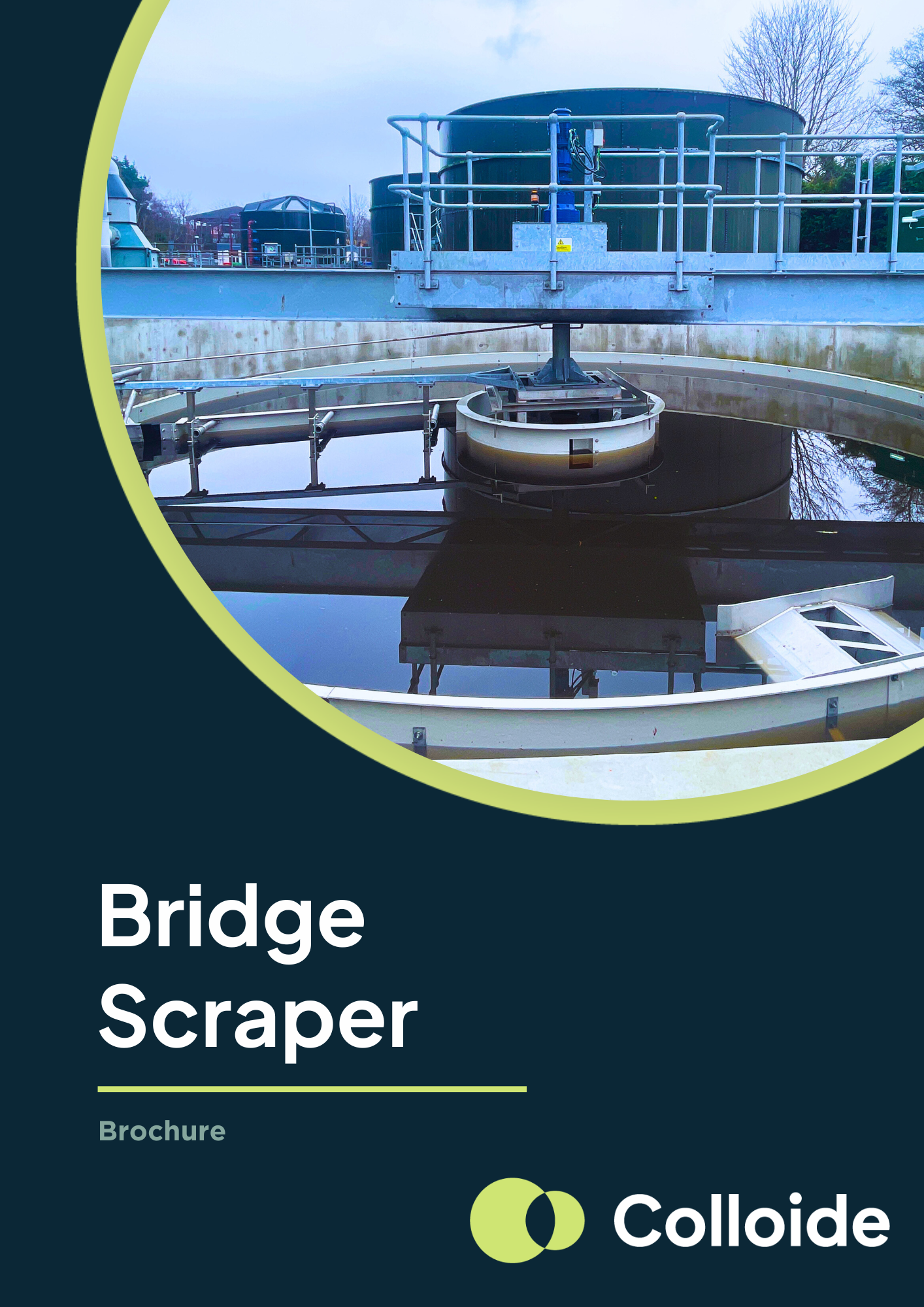
What is a Bridge Scraper?
A bridge scraper is a type of mechanical equipment commonly used in water and wastewater treatment plants to remove sludge, scum, or other debris from the surface or bottom of sedimentation tanks and clarifiers. The device operates by traversing the tank on a bridge structure, scraping and collecting waste material for removal. Bridge scrapers play a vital role in ensuring the smooth functioning of treatment plants by efficiently handling and removing waste materials.
Key Features
Sturdy structure designed to resist imparted sludge loads
Made from corrosion-resistant materials for longevity in harsh environments
Adaptable scraper blades to suit the nature of the sludge being collected and removed
A drive unit that rotates the scraping mechanism around the tank and offers smooth, consistent movement
Side-wall scraper feature for different tank configurations
Different speed options and programmable controls for precise, automated operations
Simplified design ensures minimal downtime and easy servicing
Configurable sizes with integrated safety features like guardrails and emergency stops
What is the difference between a Circular Tank Bridge Scraper and a Rectangular Tank Bridge Scraper?
Circular tank bridge scraper systems and rectangular tank bridge scraper systems both efficiently handle sludge and scum, yet they operate through distinct mechanisms. A circular tank bridge scraper is designed for circular or radial tanks, featuring a rotating or fixed bridge powered by a central or peripheral drive. This type of scraper is typically used in smaller to medium-sized wastewater treatment facilities, where radial flow dynamics enhance sludge settlement and removal.
In contrast, a rectangular tank bridge scraper is built for rectangular tanks and moves back and forth along the tank’s length, powered by a linear drive system. Rectangular tank scrapers are typically used in larger treatment facilities with higher treatment capacities, where the design suits the tank’s linear flow dynamics.
What is a Rotating Half Bridge Scraper?
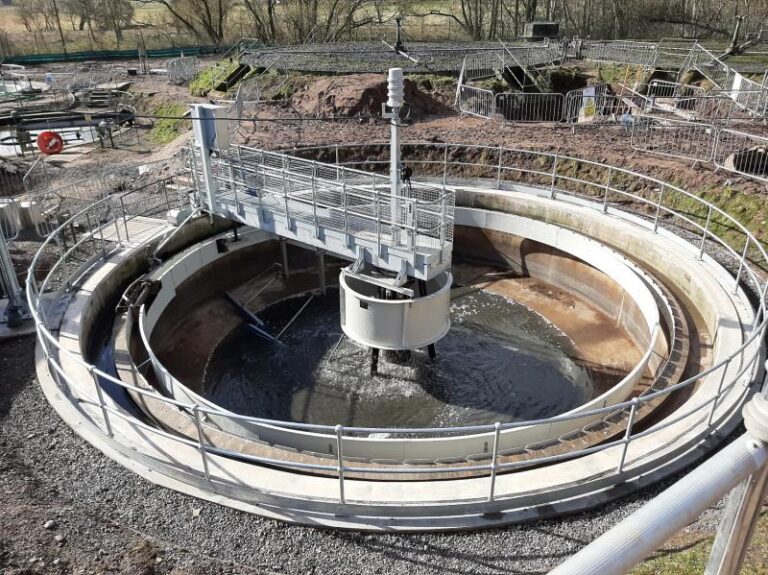
The most common solution for settlement tank scraping is the rotating half bridge typically seen in tanks up to 45m. The bridge chassis is mounted on a central support assembly, typically a tripod via a slew ring bearing with the bridge being driven by an end mounted drive carriage rotating a polyurethane tyred wheel on the tank wall. The drive and gearbox are individually sized based on bridge mass and speed of rotation. Each bridge is individually designed to tank size and solids loading data.
The method of operation is straightforward, suspended solids in the influent, settle to the bottom of the settling tank and the continuously revolving peripheral drive scraper bridges move the settled sludge to the central sludge hopper. In a flat bottom tank, a volute scraper arrangement complete with draft tubes, suction lift the sludge for transfer.

What is a fixed bridge scraper?
A fixed bridge scraper is a mechanism mounted on the walls of a tank that efficiently removes sludge and scum. These scrapers are less common than their rotating counterparts. They are typically fixed to the tank wall with a rotating scraper undercarriage underneath. The scraping mechanism operates independently, moving along the length of the tank to collect sludge and scum. The drive assembly is mounted centrally and the bridge structure is uprated to resist the additional forces and deflection seen in operation compared to a traditional trailing scraper solution.
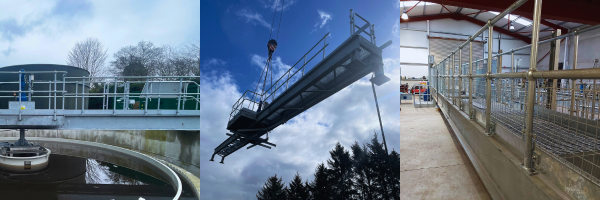
What is a Rotating Three Quarter Bridge Scraper?
These are typically seen on larger tanks where the central section surrounding the hopper will benefit in additional scraper coverage. As the name suggests, the bridge projects halfway out into the tank not covered by a half bridge during rotation. These bridges due to their size will see enhanced structural strengthening by use of lattice and bracing within the bridge structure and drive assemblies suitably uprated to cope with the structure.
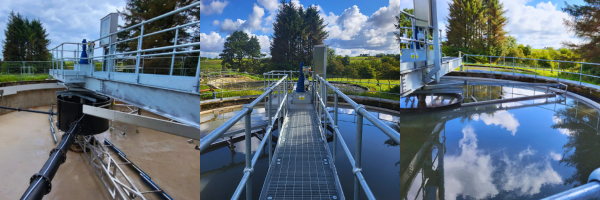
What is a Travelling Longitudinal Bridge Scraper?
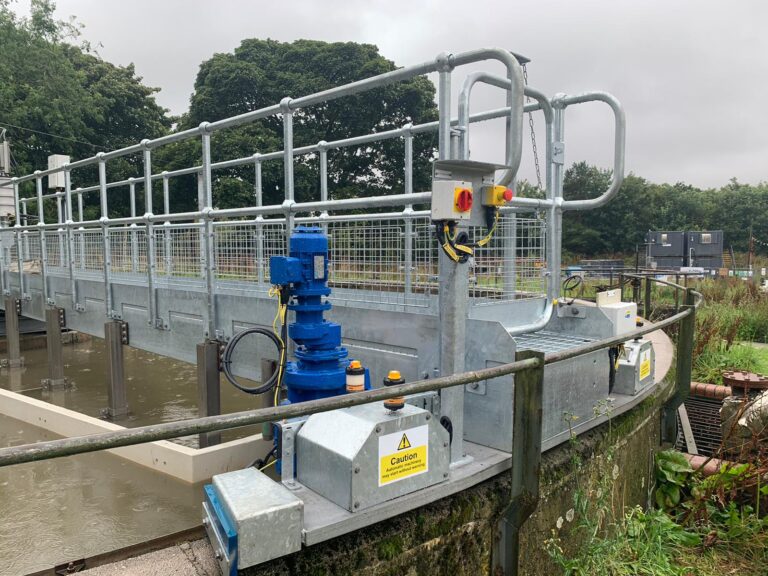
Longitudinal linear travelling bridges are employed in rectangular settlement tanks. They consist of a rear retractable scraper which scrapes sludge to a hopper situated at the end of travel location. The scraper then rises to allow the bridge to retreat to its home location to begin the cycle again.
The bridge scraper is centrally driven to a rack and pinion arrangement on each side with crane rails used to ensure alignment and reduce the possibility of skew and drift. Peripherals that are required are items such as, scum scraper, scum troughs and cable management systems – either energy chain or cable reels.
Advantages of Bridge Scrapers
Range of designs, offering flexibility to clients.
Remote operation and real-time monitoring
Minimises manual labour
Cost-effective and low operational costs
Long lasting performance
Low maintainance with simple mechanical design
Disadvantages of Bridge Scrapers
Requires adequate space
Initial installation and start-up costs
Requires power for continuous operation, increasing energy use
Less efficient in handling large debris without pre-treatment
Maintenance of Bridge Scrapers
Maintaining bridge scrapers includes various methods such as daily inspections and scheduled activities, including;
- Visual and dimensional checks whilst ensuring the machine operates quietly and efficiently.
- Inspection of the bridge scrapers welds and spark tests.
- Hydrostatic test to ensure bridge scraper is free from any leaks.
- Refresher training for any staff using the equipment.
- Important to note blades and other parts may need reinstalled.
Difference between Primary Settlement Tanks and Final Settlement Tanks
Primary settlement tanks and final settlement tanks are both essential components in wastewater treatment, but they serve different purposes in the treatment process.
In wastewater treatment, the primary settlement tank crucially removes solids and organic matter as wastewater first enters the tank. Here, the sludge settles at the bottom, effectively separating it from the water. The process continues as the partially cleaned wastewater moves to the final settlement tank. The purpose of final settlement tank is to further remove any remaining suspended solids and biological flocs from the treated water before it is discharged or undergoes tertiary treatment.
In summary, primary settlement tanks are part of the initial wastewater treatment phase for removing large solids, while final settlement tanks refine the water after biological treatment by removing remaining suspended particles.
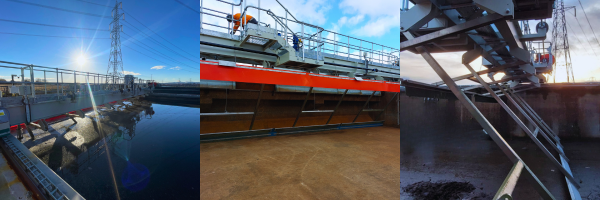
Our Projects incorporating Bridge Scrapers.
Why choose Colloide?
At Colloide we offer tailored solutions to you. With over 20 years of experience within the water and wastewater treatment industry, we have designed and constructed a large collection bridge scrapers. Colloide have a wealth of knowledge ensuring high quality service and reliable solutions. Our team have earned us a reputation as a trusted partner for water utility companies across the UK and Ireland.
When you Partner with Us
Our Circular and Rectangular Scraping Systems have been intelligently engineered to optimise the separation process in settlement and flotation tanks, ensuring unparalleled efficiency and top-tier performance.
We understand that every water treatment facility is unique, and that’s why we offer customisable options that match specific needs and requirements. We work closely with clients and contractors, providing support from initial concept to final implementation.
Colloide’s Bridge Scrapers are meticulously constructed off-site, ensuring swift and efficient deployment. This approach minimises on-site disruption, reduces installation times, and accelerates the commissioning process.
With our complete in-house manufacturing capabilities, we maintain strict quality control throughout the production process. We are CE marked and fully WIMES compliant and this results in Bridge Scrapers of exceptional quality, built to withstand the rigors of water treatment operations.
Our Bridge Scrapers feature retractable arms, enabling hassle-free scraper maintenance. By decreasing drain downs to allow operators to access the tank, downtime is minimised, reducing pressure on other treatment works’ assets. This ensures continuous operation and enhanced productivity.
Colloide’s Bridge Scrapers can be equipped with advanced pumped and syphon systems, ideal for flat bottom tanks. These efficient systems facilitate sludge transfer from the settlement tank to downstream processes.
Colloide is committed to sustainability; our visions is “A brighter tomorrow for people and the plant” and our purpose is “To improve our environment through sustainable engineering solutions.” We are actively exploring carbon offset technology to contribute to a greener future. With our innovative solutions, we aim to reduce environmental impact and promote eco-friendly practices.
Colloide’s Bridge Scrapers are engineered to last, with an extended design life of 40+ years. This long-termreliability ensures cost-effectiveness and minimises the need for frequent replacements.
Complementing our cutting-edge engineering solutions and in-house team, we have a strong site installation team. Our skilled fitters and fabricators are well-equipped to handle various on-site challenges, ensuring seamless implementation and execution. From the initial groundwork to the final commissioning, our team manage the entire installation process, adhering to stringent quality and safety standards.
At Colloide, our commitment to excellence extends beyond the design phase, as our site services guarantee the smooth realisation of engineering projects, ensuring customer satisfaction and long-term reliability.
To find out more contact us at Contact : Colloide