

Colloide as Your D&B Delivery Partner
De-Risking Energy Centres and Heat Networks for Large Developers
The UK heat network market is consolidating around scale. Heat Network Zoning regulations are due in 2026, the Advanced Zoning Programme has now expanded across roughly 19 urban authorities, and capital expenditure across the early pipeline of zones is forecast to run into billions. Major Zone Developers – companies like Bring Energy, Veolia, Gren, 1Energy, Vital Energi, Hemiko, SSE Energy Solutions, Vattenfall and E.ON, are being appointed under long-form development agreements covering whole districts, with exclusive rights to design, fund, build and operate large urban networks for decades. The first competitive procurements are already in flight, with the City of London expecting to appoint its Heat Network Development Partner in late 2026 and the first AZP cities (Leeds, Plymouth, Bristol, Stockport, Sheffield and two London zones) targeting accelerated construction.
The strategic prize for these developers is enormous but so is the delivery risk and the place where that risk concentrates is the energy centre and plant room.
Where the technical risk really sits
A heat network is, in the end, a piece of infrastructure that must perform thermally, hydraulically, commercially for thirty to forty years. What determines whether a scheme actually delivers the carbon savings and the revenue model the financial case was built on is the energy centre.
It’s where the heat sources sit: heat pumps, CHP, thermal stores, gas backup boilers, solar thermal, river or sewer water abstraction, waste heat exchangers from data centres, the Underground or industrial sites. It’s where complex M&E and process engineering interact: refrigerants, ammonia, glycol loops, side-stream filtration, water treatment, pressurisation, HV/LV electrical, private wire, battery storage, controls and SCADA. It’s where the network’s coefficient of performance is set, where flow temperatures are managed against return temperatures, and where the commercial case either holds together or falls apart.
For a developer signing a 25-year concession, getting this scope wrong has consequences far beyond the capital phase. A heat pump that under-delivers on COP eats margin every winter for the life of the contract. An energy centre that’s late to commission delays customer connections and revenue. An integration error between the energy centre and downstream plant rooms creates years of service complaints. This is the part of the scheme that benefits most from a specialist delivery partner and the part where main contractor margin is most exposed.
Why a specialist subcontractor changes the risk profile
Colloide doesn’t compete for whole-zone development agreements. What we do is the engineering centre of gravity inside those schemes: the design and build of the energy centre, the central plant, and the network plant rooms.
Self-delivering this scope as a specialist subcontractor de-risks the developer in three ways:
First, it consolidates accountability. With a single D&B partner owning process, mechanical, electrical, controls, civils interfaces and commissioning across the energy centre, there’s no fragmentation between the heat pump supplier, the M&E contractor, the controls integrator and the testing house. The cause-and-effect chain when something doesn’t perform is short and unambiguous.
Second, it removes the design-construction interface risk. Our process engineers, M&E engineers, design team and project management work under one roof. The team that signs off the P&IDs is the team that signs off the commissioning records. That continuity is hard to replicate when these disciplines are split across multiple firms with different commercial interests.
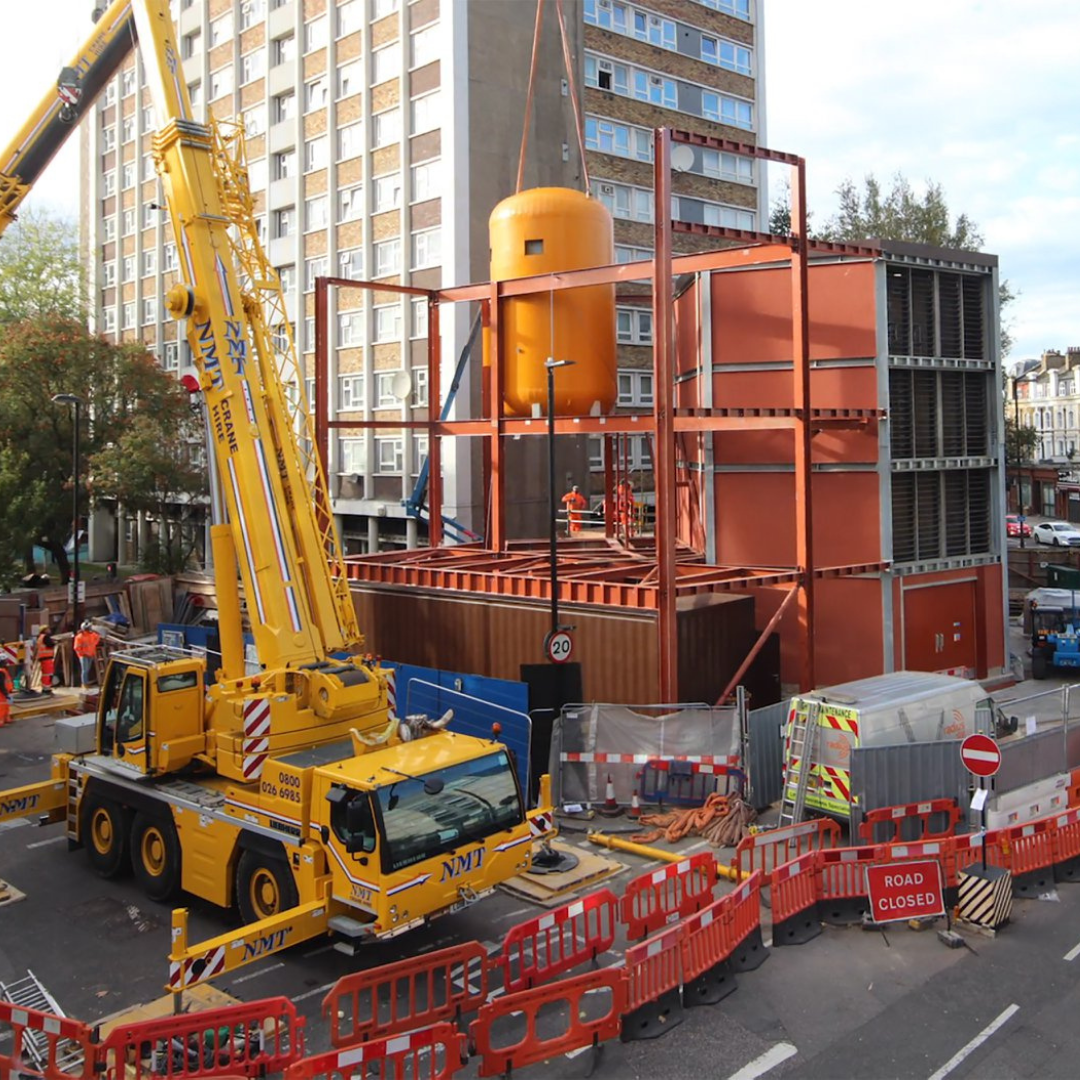
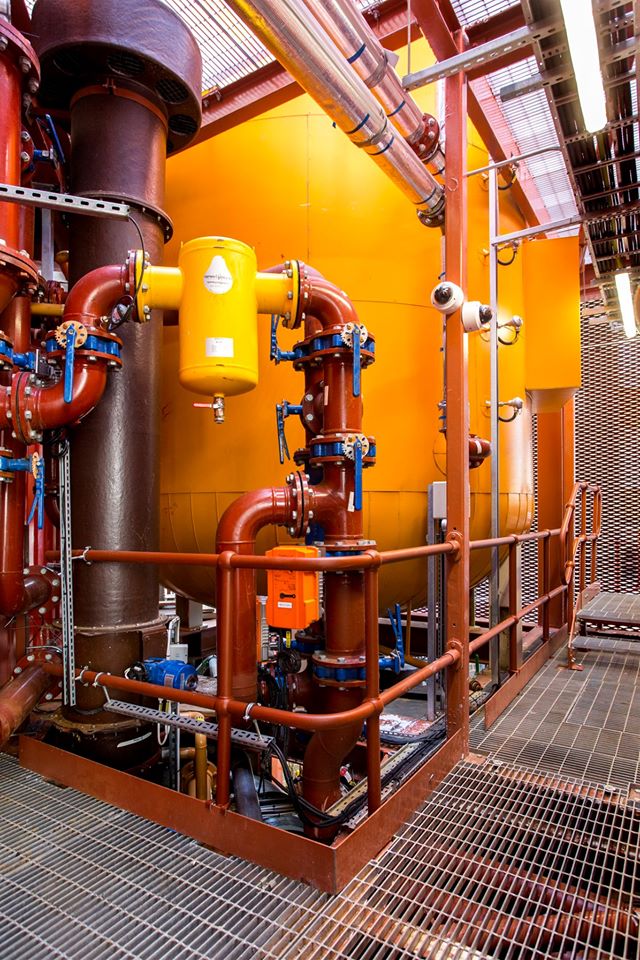
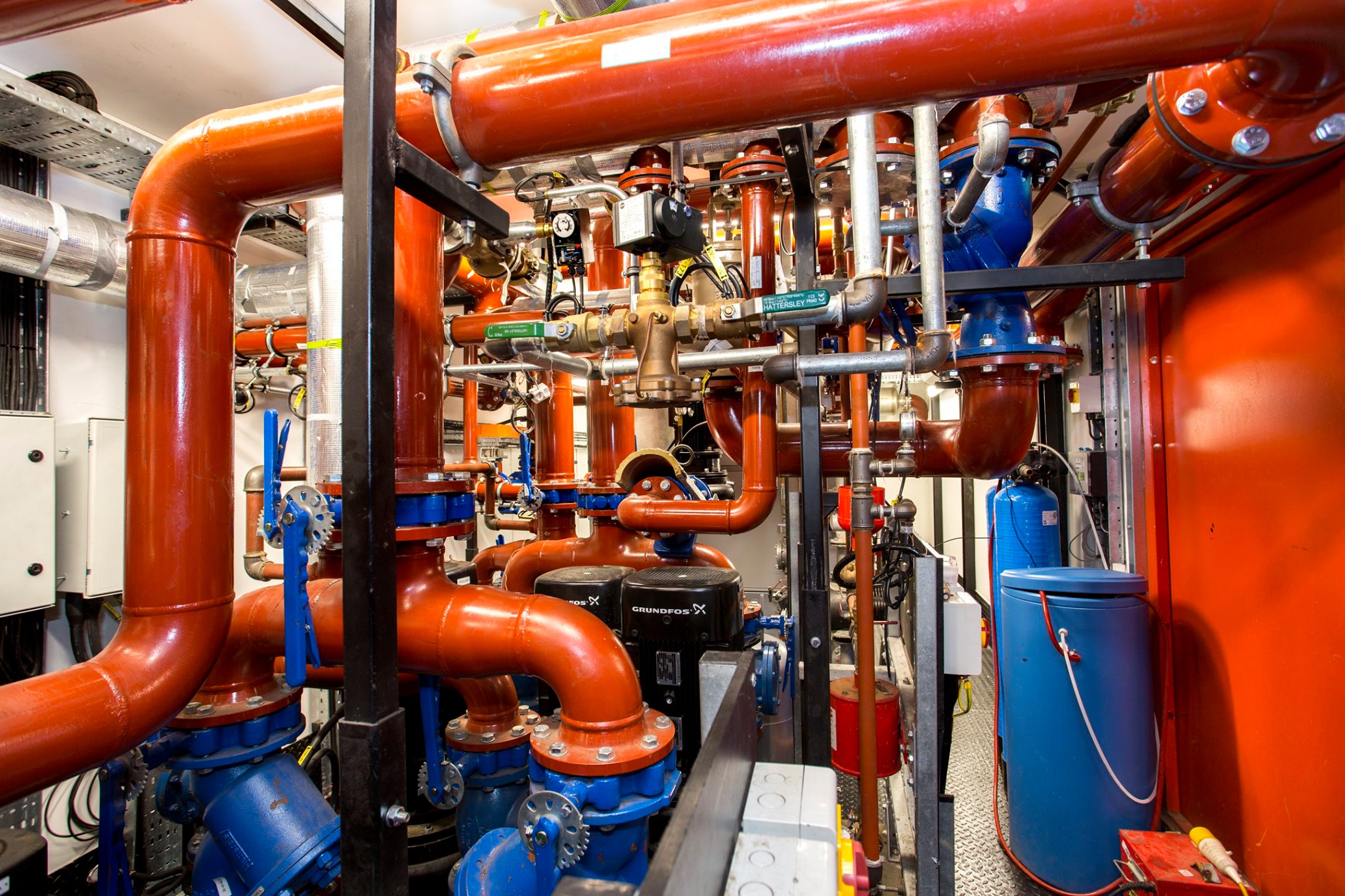
Third, it brings genuine modular delivery to a market that often still treats energy centres as bespoke construction projects. Pre-fabrication, off-site pressure testing, modular skids that can be split and reconnected on site – this is how we built Bunhill 2 and how we approach every scheme since. It compresses programme, reduces site labour exposure, and turns commissioning from a multi-month ordeal into a managed handover.
Proof Points
Bunhill 2, Islington – A World First

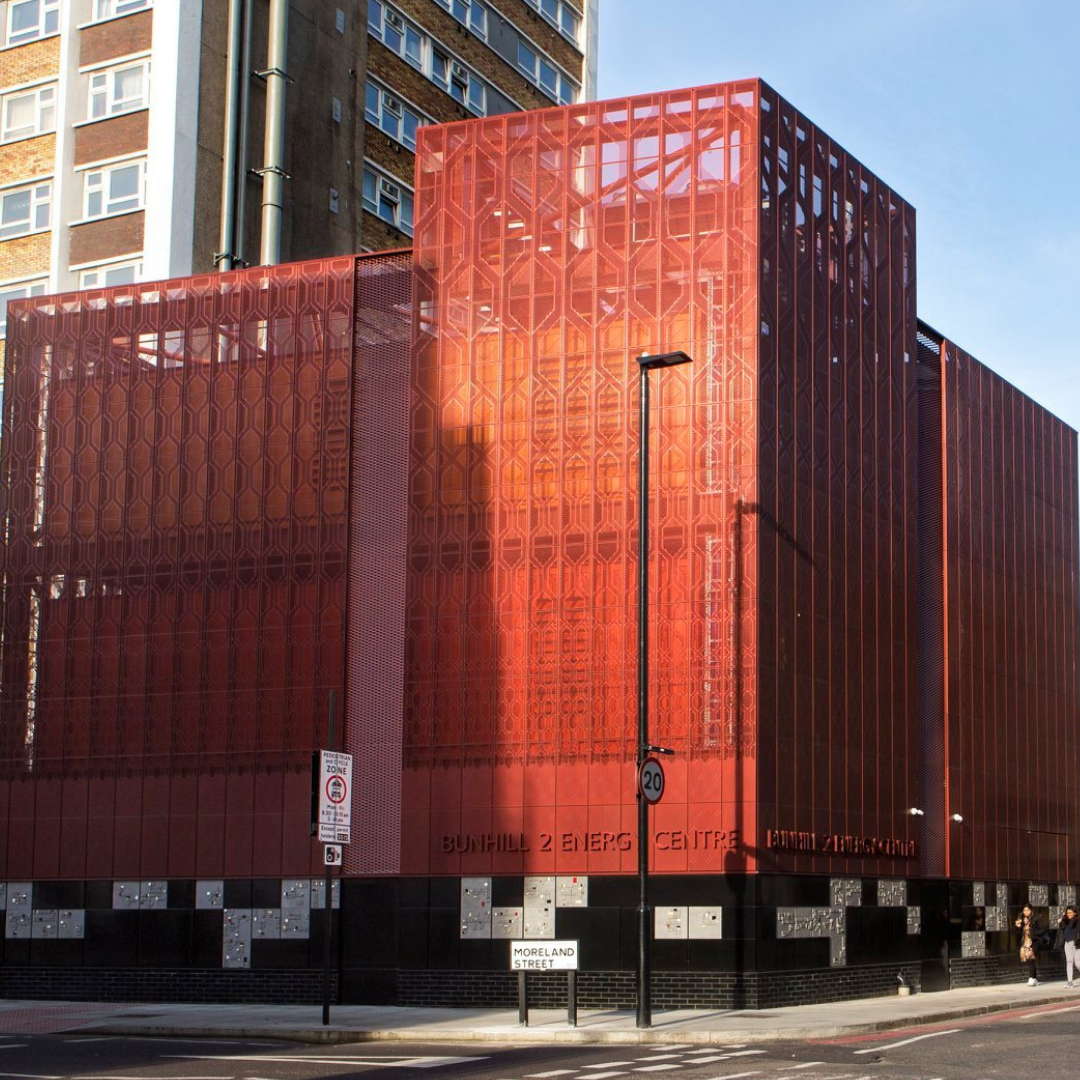
Bunhill 2 was the first scheme in the world to take waste heat from an underground railway network and feed it into a district heating system. Colloide was the principal design and build contractor for the energy centre and the network extension, working with Islington Council, Transport for London and a wider design team led by Ramboll, Cullinan Studio and McGurk Architects.
The technical heart of the scheme is a 500kW ammonia heat pump, recovering warmth from a London Underground mid-tunnel ventilation shaft on the Northern Line. Air at 18–28°C is extracted from the tunnels by a two-metre fan – reversible, so the same equipment can also help cool the Tube in summer and passed across a heat exchanger coil. The recovered energy drives the ammonia heat pump, which lifts the temperature to a flow regime suitable for a district network.
Alongside the heat pump, the energy centre houses two natural gas CHP units with a combined output of 700kW, providing both heat and power. The CHP electricity is fed into the London Underground network and an adjacent tower block, powering communal lighting and lifts, and is also used to drive the heat pump when grid electricity prices peak. The energy centre connects to roughly 1.5km of new district heat pipework, integrating with the existing Bunhill phase 1 network.
The build was technically and commercially demanding. The site sits on a disused Underground station at City Road, closed for nearly a century. Working with TfL on live infrastructure, integrating with multiple existing plant rooms across the estate (each of which had to be upgraded to accept district network heat), and running an ammonia refrigerant system in central London all required careful engineering and stakeholder management. The plant was packaged as a plug-and-play system on pressure-tested skids, fabricated in modular sections that could be split and reconnected to navigate restricted access routes onto the site. Site labour was minimised. The scheme is operational, has reduced council-tenant heating bills against equivalent communal systems, and saves an estimated 500 tonnes of CO₂ a year.
Viking Energy Network Jarrow – A UK First

Where Bunhill 2 used Underground vent heat, Viking Energy Network Jarrow (VENJ) uses river water. Colloide acted as Principal Contractor for South Tyneside Council, delivering the UK’s first scheme to combine a river source heat pump, CHP, large-scale solar PV and battery storage in a single integrated network. It was officially opened by HRH The Duke of Gloucester in 2025 and won the RICS Public Sector Project award in 2024.
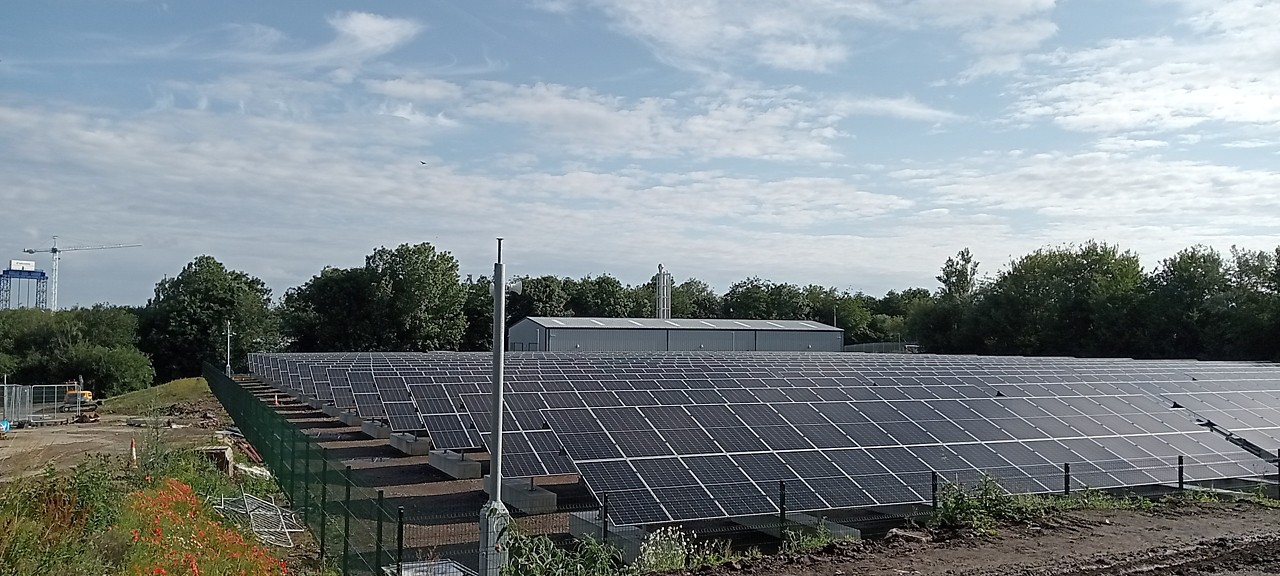
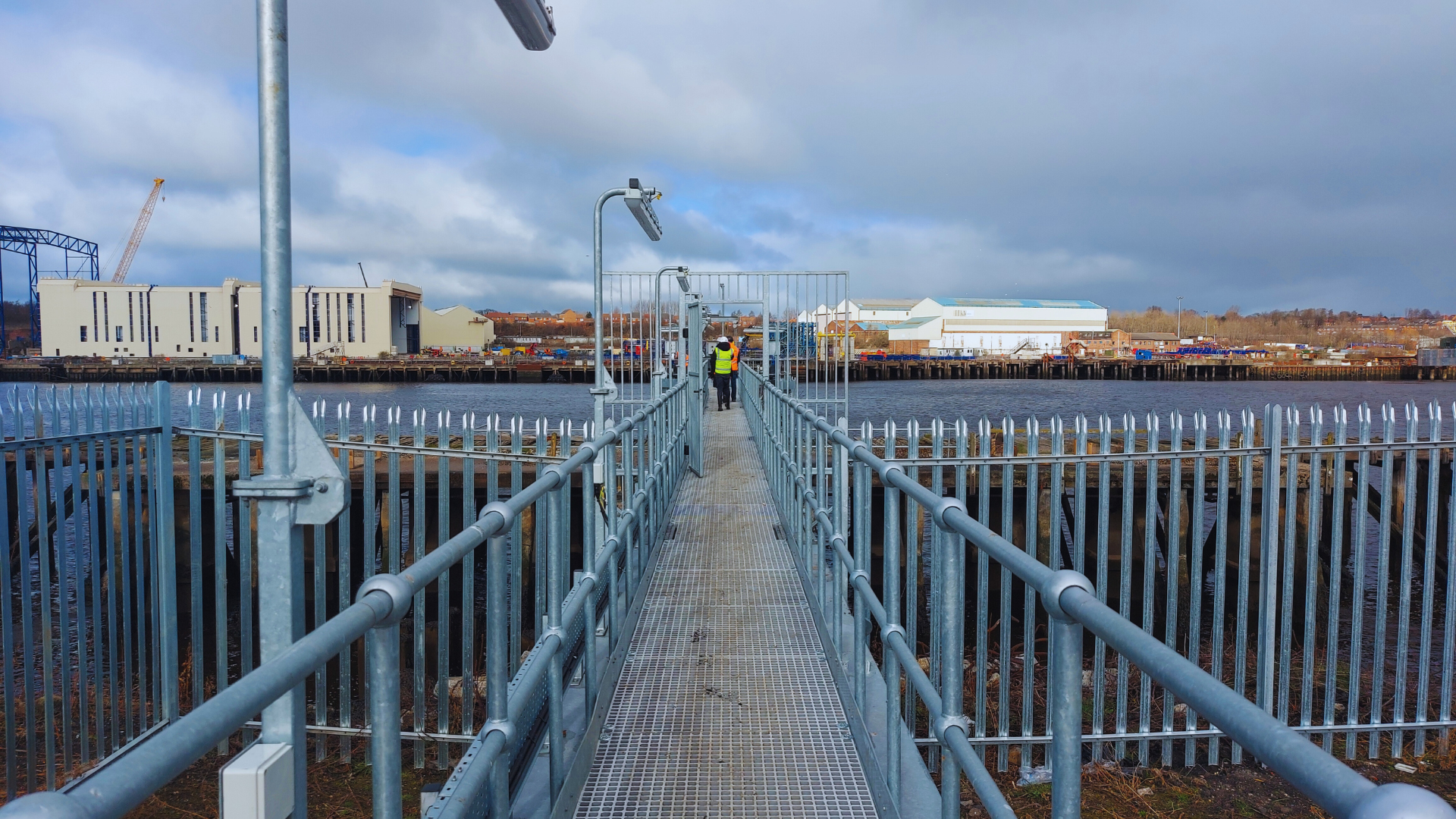
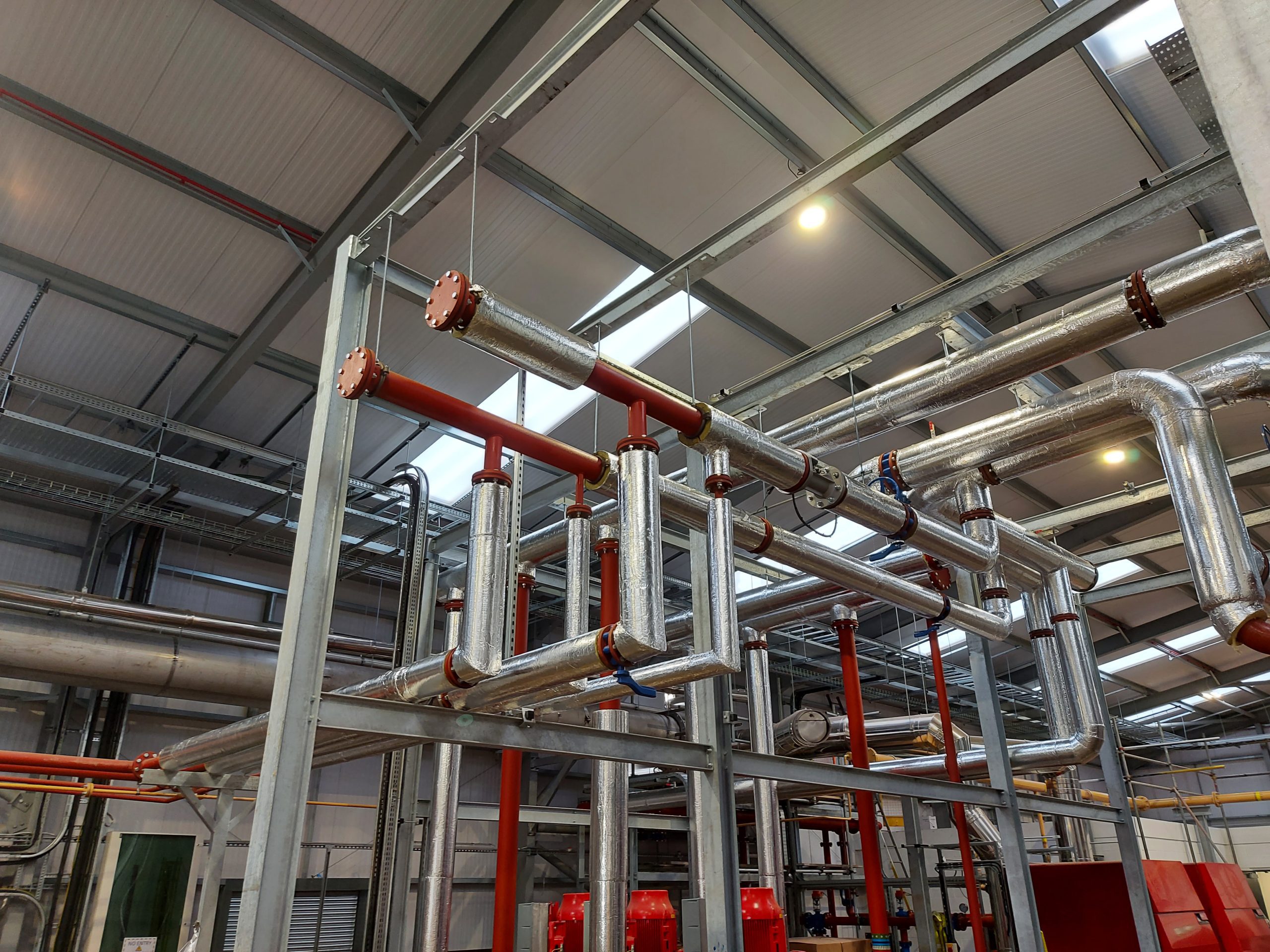
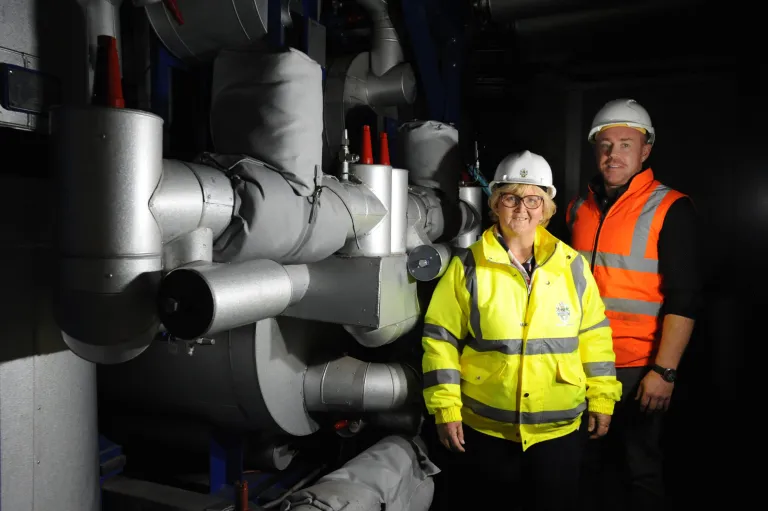
The energy centre, built on a brownfield site at Jarrow Staithes on the south bank of the Tyne, abstracts more than 2,000 litres of river water per minute. The water is pre-warmed using a 150kW solar thermal array, then passed through a 700kW industrial water source heat pump that extracts roughly 500kW of usable heat at a coefficient of performance of around 3, lifting flow temperatures to 75°C – high enough for a conventional district heating regime. Alongside the heat pump, the energy centre houses two gas boilers and a CHP unit for resilience and peak-load support, plus thermal stores, pressurisation units, side-stream filtration, HV/LV switchgear and transformers. A 1MW solar farm on adjacent land supplies renewable electricity to the heat pump, with surplus exported to Jarrow Town Hall via a private wire. A 650kWh battery system manages excess generation. More than 2.5km of insulated district heating pipework distributes heat to three residential tower blocks, Jarrow Focus leisure centre, Jarrow Business Centre and the Town Hall, with capacity to expand into local schools, sheltered housing and a hospital.
Colloide’s scope on VENJ is the clearest illustration of what we mean by specialist energy centre delivery. We strengthened the existing quay and installed new platforms and pipework for water abstraction. We built the pump station and the energy centre, including all M&E systems. We constructed a separate gas meter house with full network connections. We developed the solar farm and constructed the new substations. We installed the 3km+ of district heating pipework and the private wire infrastructure. The scheme cuts more than 1,000 tonnes of carbon a year, was partly funded by a £4.6m ERDF grant, and an independent post-completion assessment by Newcastle University Energy Centre concluded that the project has high strategic value as a demonstrator of heat networks and heat pumps in the transition to net zero.
What’s actually inside our team
Two projects of that complexity, both UK or world firsts in their technology integration, are not delivered by procurement alone. They’re delivered by an integrated team. Colloide’s offer to a developer is built around in-house disciplines:
- Process engineering, applied to the thermo-hydraulic design of the energy centre – heat source integration, COP optimisation, primary/secondary network configuration, water treatment, refrigerant systems.
- M&E engineering, taking that process design through to detailed mechanical and electrical implementation, including HV/LV, controls, SCADA, private wire and grid connections.
- A design team that owns the drawings end-to-end, including 3D coordination of plant room layouts and modular skid design.
- Project management that runs the programme from concept through commissioning and into operational handover, including dealing with the awkward realities – existing plant room upgrades, live-site interfaces with operators like TfL, ground conditions on brownfield sites, planning conditions, ERDF or grant compliance.
Behind that, our manufacturing facility allows us to fabricate and pressure-test plant skids off-site under controlled conditions, then deliver them to site in modular form. This is the same approach that made VENJ deliverable on a constrained riverside footprint. For developers working to AZP delivery dates, that off-site model is increasingly the difference between a programme that holds and one that drifts.
Why this matters now
The next two years are when the AZP zones move into procurement and construction, and when private capital begins to flow against the new zoning framework at scale. UK Infrastructure Bank and the National Wealth Fund have signalled support for the sector and identified a project pipeline whose total capex requirement runs into the billions, much of which will be privately financed. Heat sources being targeted for these networks include rivers, the Thames, sewers, energy-from-waste plants, data centres, mine water and waste heat from underground railways.
For a Zone Developer or main contractor putting together a delivery model under one of these agreements, the strategic question is which scopes you self-perform and which you place with specialist subcontractors who carry the technical track record. Energy centres are the scope where a wrong call gets very expensive across the life of the concession. They are also the scope where the right specialist partner can collapse risk substantially.
Where Colloide fits
We are looking to build long-term partnerships with the developers leading the next generation of UK heat networks. Our offer is straightforward: we will design and build the energy centre and central plant scope of your scheme, on a self-delivered basis, with our own process, M&E, design and project management teams, and our own manufacturing capability.
If you’re scoping the energy centre packages for an AZP or post-zoning network, or thinking about how to de-risk the central plant on a private-wire or campus heat scheme, we would value a conversation. We’re particularly interested in talking to developers who want a specialist delivery partner with a credible track record in heat pump–led, low-carbon energy centres.